
U.S. Legal in Most States • Discreet Shipping • Real-World Protection • No Permits Required in Most Areas
U.S. Legal in Most States • Discreet Shipping • Real-World Protection • No Permits Required in Most Areas
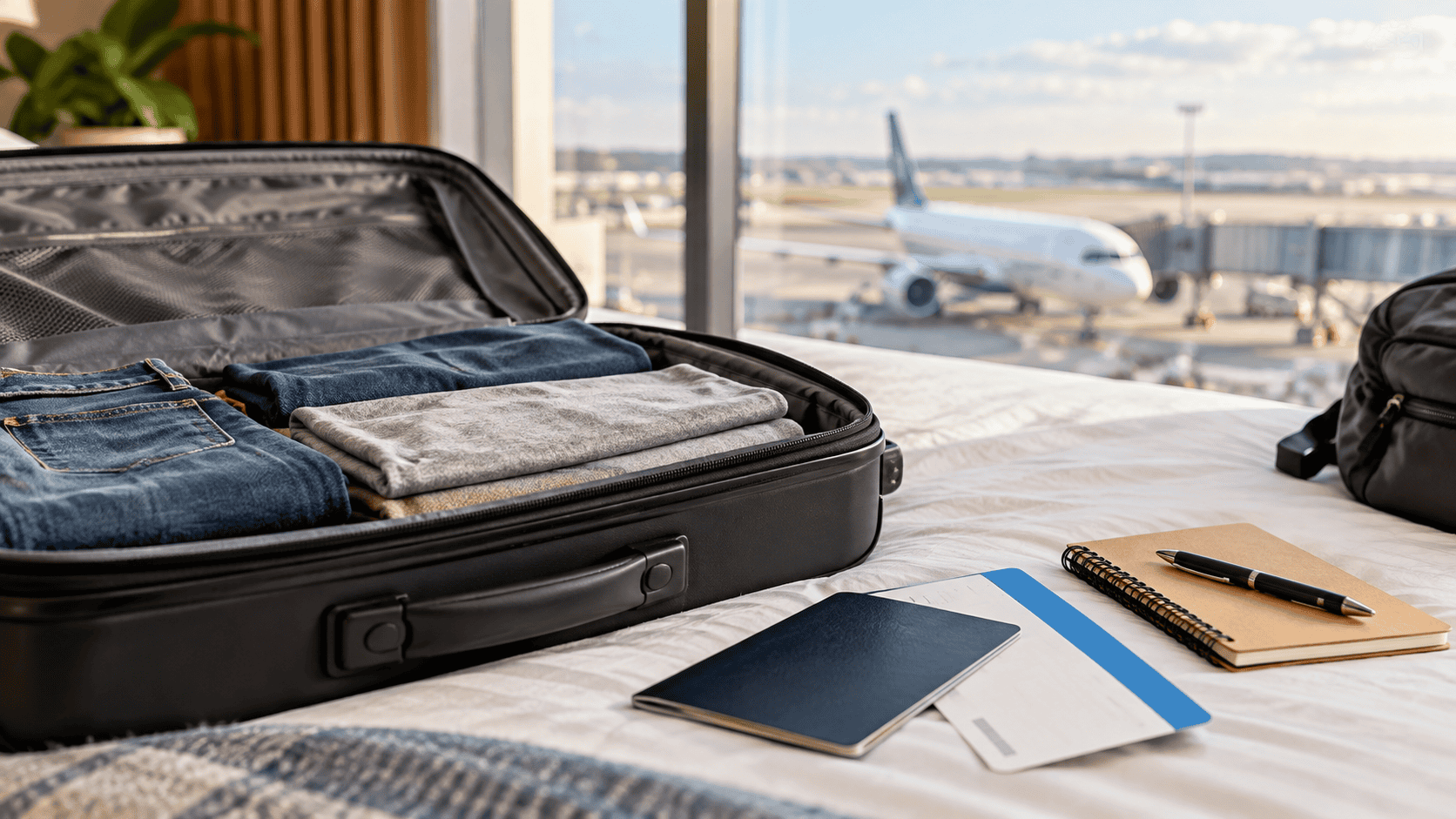
So, are stun guns allowed on planes? Quick Answer: Under current TSA rules, stun guns, TASER devices, and other shocking devices are not allowed in carry-on baggage. They may be transported in checked baggage with special instructions, including making sure the device cannot activate accidentally. Battery rules and airline policies also matter, so check both TSA and your airline before traveling.
That means you cannot take a stun gun through the security checkpoint in your purse, backpack, pocket, or other carry-on bag. If you want to travel with one, the first question is whether your airline allows it in checked baggage. And whether the device and its battery can be packed in compliance with current TSA and FAA requirements.
TSA currently lists stun guns, TASER devices, and other electro-shock or conducted electrical weapons as prohibited in carry-on baggage but permitted in checked baggage with special instructions.
The device must be transported in a way that prevents accidental discharge or activation. That requirement is especially important because many modern stun guns use rechargeable lithium batteries, which are subject to separate aviation safety rules.
Because TSA guidance can change, check the current TSA “What Can I Bring?” listing before each trip rather than relying on an older article or a previous flight.
No. Under current TSA rules, stun guns and shocking devices are not permitted in carry-on baggage.
That includes backpacks, purses, briefcases, roller bags, and other items you plan to take through the passenger screening checkpoint and into the aircraft cabin.
If a stun gun is discovered at the checkpoint, it may result in delays, loss of the item, enforcement action, or other consequences depending on the circumstances. The safest approach is to check the rules before leaving for the airport and make sure prohibited items are not in your carry-on.
Yes, TSA currently permits stun guns and other shocking devices in checked baggage with special instructions.
The key federal requirement is that the device be transported in a way that prevents accidental activation. Depending on the design, that may involve using the device’s safety switch, locking mechanism, protective case, battery arrangement, or another method recommended by the manufacturer.
Do not assume that every stun gun must be packed exactly the same way. Designs differ, battery systems differ, and airlines may impose additional restrictions beyond the basic TSA rule.
Battery rules are one of the most important parts of traveling with a modern stun gun.
FAA guidance says that lithium-battery-powered electronic devices placed in checked baggage must be completely powered off and protected from accidental activation and physical damage.
Spare or uninstalled lithium batteries are treated differently. They generally may not be packed in checked baggage and instead must be carried in the aircraft cabin, subject to applicable battery-size and airline restrictions.
That creates a practical reason to check the battery type in your particular stun gun before traveling. A built-in rechargeable battery, removable lithium battery, alkaline battery, or another power source may be subject to different handling requirements.
Not necessarily. Current TSA guidance does not state that the battery must always be removed from a stun gun before it is placed in checked baggage.
Instead, the device must be protected against accidental activation, and applicable FAA battery rules must be followed. If the battery is removable and is carried separately, the rules for spare batteries may apply.
Follow the manufacturer’s instructions and your airline’s requirements for the specific device rather than relying on a universal “remove the battery” rule.
TSA’s current stun-gun guidance does not state that every stun gun must be transported in a locked hard-sided case.
A protective case may still be a sensible way to protect the device from damage or accidental activation, and an airline may establish additional packaging requirements. But the hard-sided locked-case requirement commonly associated with firearms should not automatically be applied to every stun gun unless the airline or another applicable rule specifically requires it.
TSA’s current public guidance for stun guns does not state a universal declaration requirement comparable to the declaration rules that apply to firearms.
However, your airline may have its own procedures for accepting stun guns or other defensive devices in checked baggage. Because airline policies can be stricter than TSA’s baseline rules, check directly with the carrier before you travel.
TSA controls passenger screening and establishes federal security rules, but airlines can adopt additional baggage restrictions. There are stun gun laws and restrictions with which you should be acquainted.
An item that TSA permits in checked baggage is not automatically guaranteed to be accepted by every airline. Some carriers may restrict certain battery-powered devices, require special packaging, or prohibit particular defensive products entirely.
Before heading to the airport, check your airline’s current baggage policy and contact the carrier if its published guidance is unclear.
Because stun guns and shocking devices are prohibited in carry-on baggage, bringing one through passenger screening can create serious problems.
TSA can take enforcement action when prohibited items are discovered at a security checkpoint. The outcome depends on the circumstances and applicable rules, but travelers may face delays, loss of the item, civil penalties, or referral to other authorities.
The simplest way to avoid that situation is to inspect your carry-on bags before leaving home, especially if you normally keep a stun gun or other defensive device in a purse, backpack, vehicle bag, or travel bag.
Different personal safety products have different aviation rules.
For example, TSA currently prohibits self-defense sprays such as pepper spray in carry-on baggage. A qualifying container may be permitted in checked baggage under specific size, safety-mechanism, and formulation restrictions. Some airlines do not allow self-defense sprays even when TSA rules would otherwise permit them.
Personal alarms and other non-weapon safety devices may be subject to different rules. Rather than assuming all self-defense products are treated alike, check the TSA listing for the exact item you intend to bring.
International travel requires additional caution.
TSA rules apply to U.S. passenger screening, but the laws and aviation rules at your destination may be very different. Some countries prohibit possession or importation of stun guns entirely, while others may regulate them as weapons or require specific authorization.
Airlines serving international routes may also follow additional international dangerous-goods restrictions. Check the laws of your destination and any transit countries, along with the airline’s policy, before packing the device.
If the legality or transportation rules are unclear, leaving the stun gun at home may be the simplest way to avoid customs, security, or legal problems.
You cannot carry a stun gun in carry-on baggage under current TSA rules. TSA currently permits stun guns and shocking devices in checked baggage with special instructions, including protecting the device from accidental activation.
Yes, under current TSA rules. The device must be transported in a way that prevents accidental activation, and applicable battery and airline requirements must also be followed.
Not in every case. TSA does not publish a universal rule requiring the battery to be removed from every stun gun. Battery handling depends on the battery type, whether it is installed or spare, FAA requirements, and airline policy.
TSA’s current public stun-gun guidance does not state a universal declaration requirement like the one that applies to firearms. However, airlines may have additional procedures, so check with your carrier before traveling.
Pepper spray is not permitted in carry-on baggage under current TSA rules. A qualifying container may be permitted in checked baggage subject to size, formulation, and safety-mechanism requirements, but some airlines prohibit it entirely.
No. International aviation rules, airline policies, customs requirements, and destination-country laws may be more restrictive. Verify all applicable rules before traveling internationally with a stun gun or other defensive device.
Under current TSA rules, stun guns are prohibited in carry-on baggage but may be transported in checked baggage with special instructions. The device must be protected against accidental activation, and battery requirements may add another layer of rules.
The most important thing is not to rely on a one-size-fits-all packing rule. Check the exact device, its battery type, current TSA and FAA guidance, your airline’s policy, and the laws at your destination before every trip.





We use cookies to improve your experience on our site. By using our site, you consent to cookies.
Manage your cookie preferences below:
Essential cookies enable basic functions and are necessary for the proper function of the website.
These cookies are needed for adding comments on this website.
Statistics cookies collect information anonymously. This information helps us understand how visitors use our website.
Google Analytics is a powerful tool that tracks and analyzes website traffic for informed marketing decisions.
Service URL: business.safety.google (opens in a new window)
