U.S. Legal in Most States • Discreet Shipping • Real-World Protection • No Permits Required in Most Areas
U.S. Legal in Most States • Discreet Shipping • Real-World Protection • No Permits Required in Most Areas
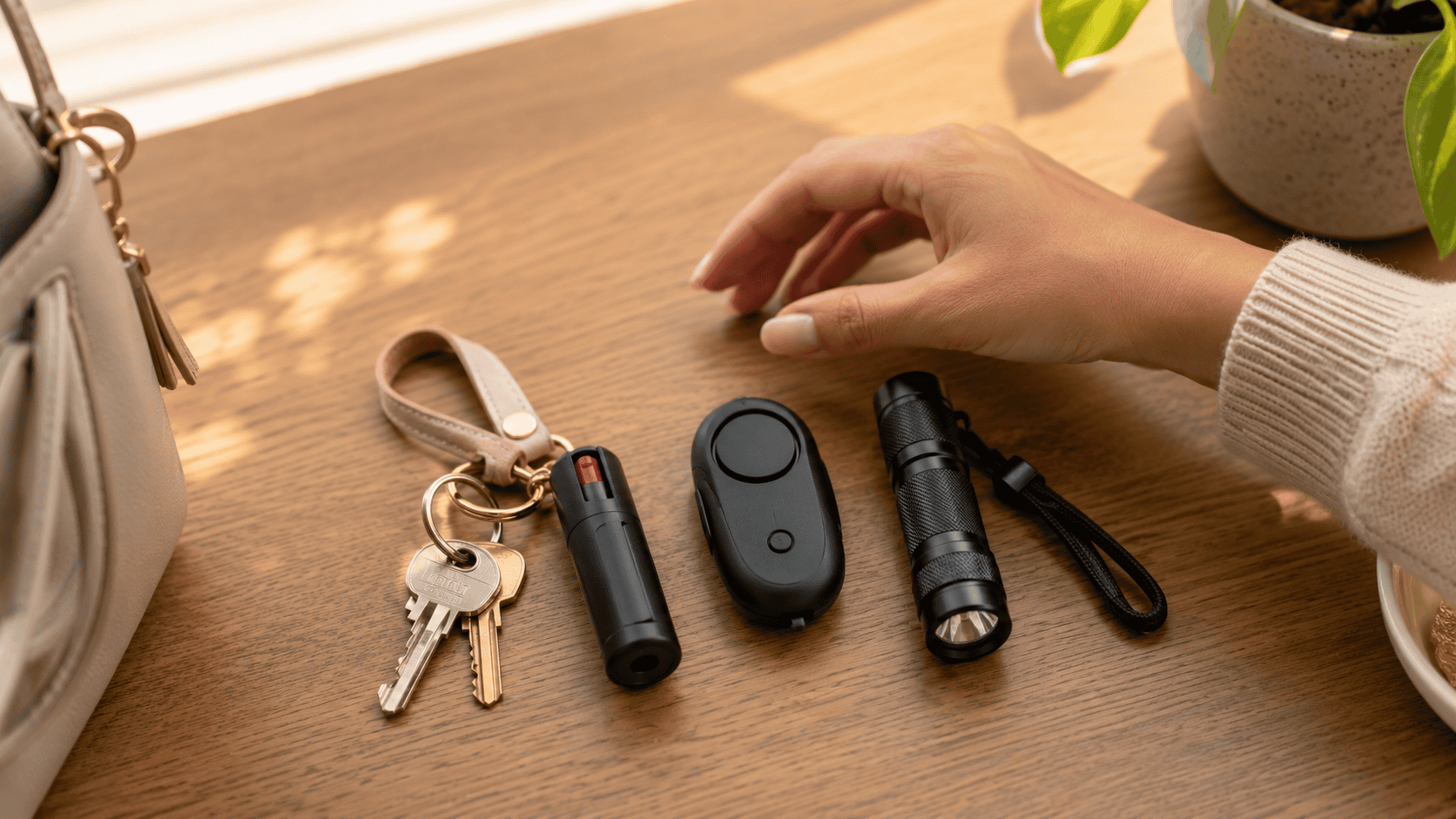
Quick Answer: A solid self-defense starter kit for most people includes pepper spray, a personal alarm, and a basic understanding of situational awareness – tools that are legal, affordable, and genuinely practical for everyday life. You don’t need a tactical background or a large budget to start feeling more prepared. The right combination of simple tools and a little knowledge goes a long way toward building real confidence.
Most people who come to me looking for self-defense products aren’t law enforcement officers or martial arts enthusiasts. They’re teachers, college students, nurses, parents walking to their cars after a late shift. They’re regular folks who’ve had a moment – maybe a strange encounter in a parking garage, maybe a news story that hit a little close to home – that made them think, I should probably be more prepared.
That instinct is a healthy one. Not paranoia. Not overreaction. Just the kind of quiet, responsible thinking that leads people to put smoke detectors in their homes and keep a first aid kit in the car. Personal safety is no different. You prepare not because disaster is certain, but because being ready gives you options – and options give you confidence.
The goal of a starter kit isn’t to turn you into a security expert. It’s to close the gap between feeling vulnerable and feeling prepared. That gap is smaller than most people think, and the tools that bridge it are simpler than you might expect.
A well-rounded starter kit covers three layers: creating distance, drawing attention, and staying alert. Here’s what that looks like in practical terms.
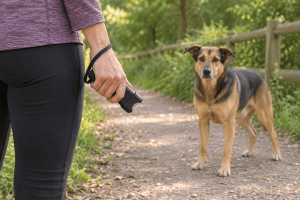
Pepper spray is one of the most widely recommended and widely carried self-defense tools for good reason. It’s effective, legal in most U.S. states (with some restrictions), compact enough to clip to a keychain, and doesn’t require physical strength or close-range contact to use. A quality canister gives you the ability to create distance between yourself and a threat without having to engage physically.
When you’re choosing pepper spray, look for a formula that uses OC (oleoresin capsicum) as the active ingredient, with a Scoville Heat Unit rating high enough to be genuinely effective – typically 1 to 3 million SHU. Stream and gel formulas reduce the risk of blowback in windy conditions, which matters if you plan to carry it outdoors. A keychain model keeps it accessible without adding bulk to your daily carry.
Carry it in a place where you can reach it in under three seconds. A spray buried at the bottom of a bag isn’t a safety tool – it’s just an accessory. Practice the motion of reaching for it so it becomes second nature.
A personal alarm is arguably the most underrated item in a starter kit, and it’s often the right first tool for people who are hesitant about other options. These small devices emit a loud, piercing sound – typically 120 to 130 decibels – when activated. That sound does two important things: it startles and disorients a potential threat, and it draws the attention of anyone nearby.
Personal alarms are incredibly simple to use. Most activate by pulling a pin or pressing a button, which means they work even in high-stress moments when fine motor skills can be compromised. They require no training, no physical strength, and no ongoing maintenance beyond an occasional battery check. They’re also universally legal and appropriate for people of all ages and physical abilities.
Think of a personal alarm as your way of saying to the world: I need help, right now, right here. In many situations, that signal alone is enough to change the outcome.
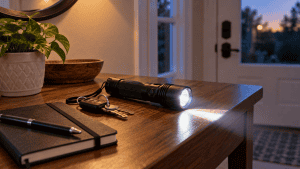
A quality tactical flashlight earns its place in a starter kit because it serves two purposes at once. Day to day, it’s simply useful – illuminating dark parking lots, checking around your car before you get in, navigating power outages. In a threatening situation, a bright beam aimed directly at someone’s eyes creates temporary disorientation and gives you a moment to react or move.
Look for a flashlight with a minimum output of 300 lumens and a strobe setting, which is particularly disorienting when used defensively. Compact models that fit in a jacket pocket or attach to a keyring are ideal for everyday carry. A flashlight is also one of the least intimidating items in a starter kit, which makes it a natural starting point for people who want to build their confidence gradually.
If you’re a college student living in a dorm, a traveler staying in unfamiliar hotels, or someone who simply wants an added layer of security at home, a door stop alarm is a practical and inexpensive addition to your kit. It wedges under any inward-opening door and triggers a loud alarm if the door is forced open. No installation, no tools, no technical knowledge required.
It’s the kind of quiet, unassuming tool that works in the background so you can sleep a little easier. That peace of mind has real value.
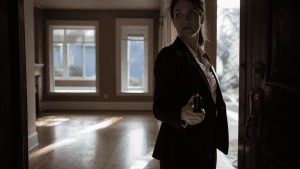
No tool in your kit matters as much as the habit of paying attention. Situational awareness isn’t paranoia – it’s simply the practice of knowing what’s going on around you. Which means looking up from your phone when you’re walking to your car. Or noticing who’s in the elevator before you step in. And trusting the quiet voice in your gut that says something feels off.
Most security professionals will tell you that awareness is the single most effective personal safety skill you can develop, because it helps you recognize and avoid potential problems before they escalate. Your tools are there for moments when awareness alone isn’t enough – but awareness reduces how often you’ll need them.
A simple habit to build: when you enter any new space, spend thirty seconds identifying exits and noting who else is present. That’s it. Over time, it becomes automatic, and it keeps you grounded in your environment rather than distracted by your phone or lost in thought.
Here’s a helpful video about developing situational awareness. Which can serve as the perfect compliment to your self defense kit.
Quality and reliability are non-negotiable when it comes to safety tools. Here’s what to prioritize when evaluating any product for your starter kit.
Tools are only part of the equation. The other part is knowing how you’d use them – and that means thinking through scenarios before they happen. Not obsessively, but practically. Where do you spend time alone? What routes do you take regularly? When and where do you feel most exposed?
Once you’ve identified those moments, you can make simple, concrete plans. Carry your pepper spray clipped to your keys when you walk to your car at night. Keep your personal alarm in your outer coat pocket, not buried in a bag. Run the strobe on your flashlight before you ever need it in a real situation so you know how it feels to use it.
Confidence in personal safety comes from preparation, not from the tools themselves. The tools support the preparation. Together, they shift your mindset from reactive to proactive – and that shift is genuinely powerful.
Pepper spray is legal in all 50 states, but specific regulations vary. Some states restrict the concentration of the active ingredient, the size of the canister, or who can legally carry it – for example, age minimums often apply. Always check the laws in your home state and any state you’re traveling to before purchasing or carrying pepper spray. Being informed keeps you both safe and compliant.
“Mace” was originally a brand name for a tear gas-based product, while modern pepper spray uses oleoresin capsicum (OC), which is derived from hot peppers and is generally considered more effective on a wider range of individuals. Today, many products labeled as mace actually contain OC as the primary ingredient. When shopping, look at the active ingredient and SHU rating rather than brand terminology to understand what you’re actually buying.
Most personal alarms emit 120 to 130 decibels of sound – comparable to a jackhammer or an ambulance siren at close range. That level of sound is hard to ignore and genuinely disorienting to anyone nearby. Whether bystanders respond depends on the environment, but even in low-traffic areas, the noise itself can startle a would-be attacker and buy you critical seconds to create distance or get to safety.
One of the advantages of a starter kit built around pepper spray, personal alarms, and flashlights is that these tools are designed to be intuitive. That said, familiarizing yourself with each item before you need it matters significantly. Know how to disengage the safety on your pepper spray, practice reaching for your alarm, and test the strobe on your flashlight. A few minutes of hands-on familiarity makes a real difference under stress.
The best carry method is whatever puts your tools within reach in under three seconds without requiring you to dig through a bag. Keychain attachments work well for pepper spray and personal alarms. A jacket pocket or belt clip is ideal for a flashlight. The habit of consistent placement is what matters most – your brain and hands need to know exactly where to go without conscious thought when a stressful moment occurs.
They can, if you purchase them without thinking about how you’d actually use them. A pepper spray canister buried in a bag or a personal alarm with a dead battery provides little real protection. The key is pairing your tools with genuine awareness and a basic plan for the situations you’re most likely to face. Treat your starter kit as a living part of your safety habits, not a one-time purchase that you stop thinking about.
Pepper spray typically has a shelf life of two to four years – check the expiration date on your canister and replace it on schedule. Personal alarms and flashlights run on batteries, so check them every few months and replace batteries proactively rather than waiting for them to fail. A quick monthly check of your full kit takes less than five minutes and ensures everything is ready if you ever need it.
Absolutely. The tools in a starter kit – pepper spray, personal alarms, and flashlights – require minimal physical strength and no special training to use effectively. A personal alarm in particular is one of the most universally accessible safety tools available, working reliably regardless of age, strength, or mobility. For anyone who might struggle with grip strength, look for larger canister designs with wide, easy-press triggers.
Getting your first self-defense tools together is a meaningful step, and I want you to feel good about taking it. But think of it as the beginning of an ongoing habit rather than a completed task. As your comfort level grows, you may want to explore additional options – a stun gun, a home security camera, a basic self-defense class in your community. All of that builds on the foundation you’re laying right now.
Start simple. Carry consistently. Stay aware. Those three things, combined with a quality starter kit, will do more for your daily sense of safety and confidence than almost anything else. And if you ever have questions about what’s right for your specific situation, reach out. That’s exactly what we’re here for.



We use cookies to improve your experience on our site. By using our site, you consent to cookies.
Manage your cookie preferences below:
Essential cookies enable basic functions and are necessary for the proper function of the website.
These cookies are needed for adding comments on this website.
Statistics cookies collect information anonymously. This information helps us understand how visitors use our website.
Google Analytics is a powerful tool that tracks and analyzes website traffic for informed marketing decisions.
Service URL: business.safety.google (opens in a new window)