
U.S. Legal in Most States • Discreet Shipping • Real-World Protection • No Permits Required in Most Areas
U.S. Legal in Most States • Discreet Shipping • Real-World Protection • No Permits Required in Most Areas
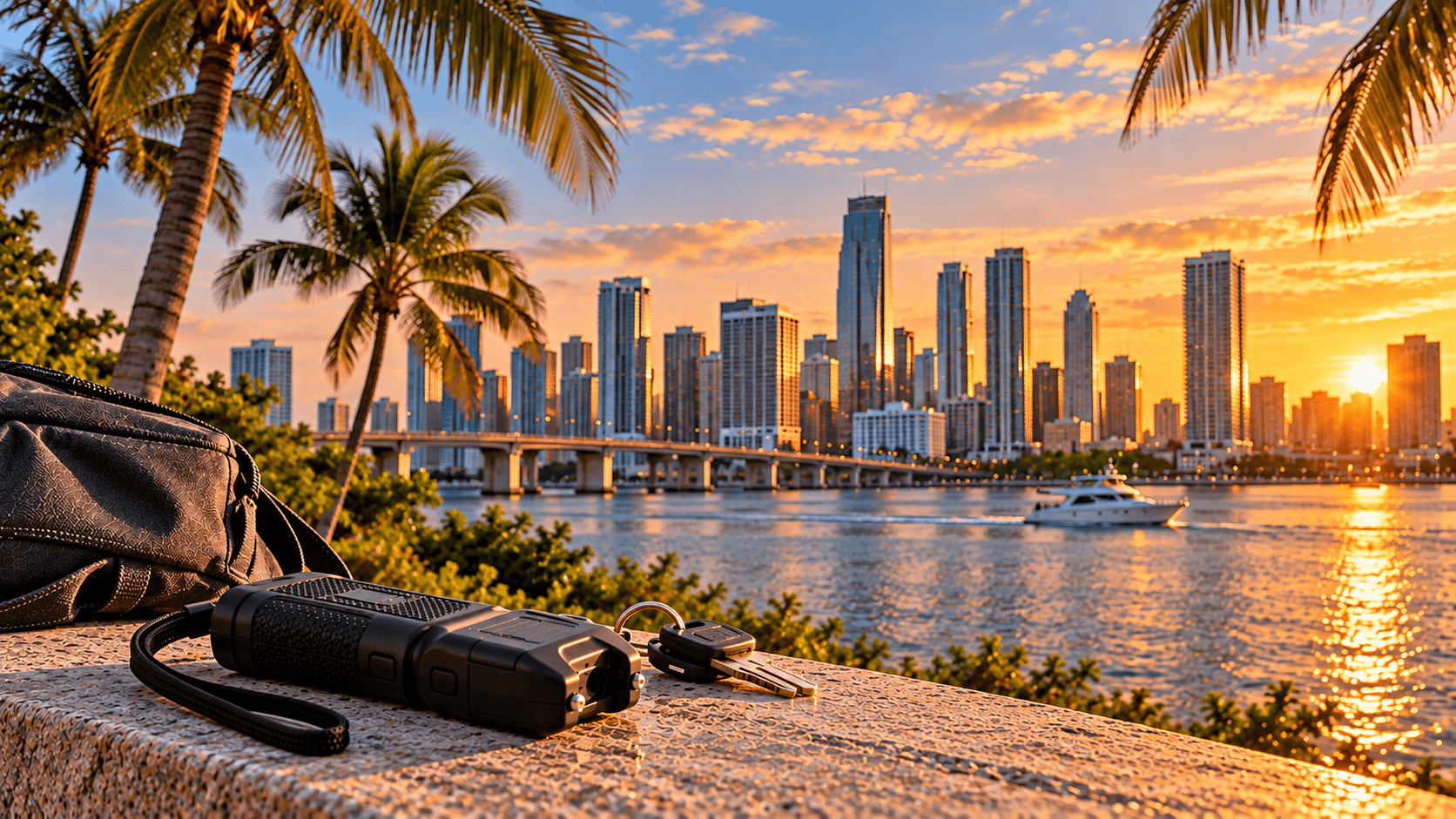
Are stun guns legal in Florida? Yes. Florida generally permits lawful possession and defensive carry of qualifying nonlethal stun guns, dart-firing stun guns, and other electrical self-defense devices. State law expressly recognizes both concealed and open carry for lawful self-defense, subject to important conditions and restrictions.
However, not every electrical weapon is treated identically. Florida distinguishes devices designed solely for defensive purposes from other electric weapons, and it has specific laws concerning minors, prohibited persons, school property, and unlawful use.
For a broader comparison of state laws, see our guide to stun gun legality in the United States.
Florida regulates electrical self-defense devices primarily under Chapter 790 of the Florida Statutes.
Two provisions are especially important: Section 790.01, concerning concealed carry, and Section 790.053, concerning open carry.
Both provisions expressly recognize qualifying nonlethal stun guns, dart-firing stun guns, and other nonlethal electric weapons or devices designed solely for defensive purposes.
The statutory exceptions are important because the general restrictions on carrying weapons do not necessarily apply to qualifying defensive devices in the same way.
Generally, no separate carry permit is required for a qualifying nonlethal stun gun carried for lawful self-defense.
Florida Statutes Section 790.01(5)(b) specifically recognizes concealed carry of a nonlethal stun gun, dart-firing stun gun, or other nonlethal electrical device designed solely for defensive purposes.
This provision is distinct from Florida’s general concealed-weapons licensing framework. A qualifying defensive stun gun does not automatically require the same licensing treatment as every other type of concealed weapon.
However, the exception depends on the device’s characteristics and its lawful defensive purpose. It should not be interpreted as permission to conceal any electrical weapon regardless of its design or intended use.
Yes, Florida law expressly permits open carry of qualifying nonlethal electrical self-defense devices.
Under Section 790.053(2), a person may openly carry a nonlethal stun gun, dart-firing stun gun, or other nonlethal electric weapon or device designed solely for defensive purposes when carried for lawful self-defense.
That is an important distinction from the general statutory restrictions on openly carrying certain weapons.
Nevertheless, permission to openly carry a qualifying device does not override school restrictions, prohibited-person laws, or other applicable rules.
Florida has specific age-related provisions, but they should not be reduced to an unsupported statement that every person under 18 is categorically prohibited from possessing a stun gun.
Section 790.22(1) generally prohibits a minor under 16 from using an electric weapon or device unless the use occurs under the supervision and in the presence of an adult acting with the consent of the minor’s parent or guardian.
The statute also provides penalties for certain adults who knowingly permit a child under 16 to use or possess a covered device contrary to its requirements.
Section 790.17(1) restricts selling, lending, transferring, or giving an electric weapon or device to a minor under 18 without permission from the minor’s parent or guardian.
These are different rules addressing different conduct. Retailers may also impose minimum purchase ages and verification policies.
Florida Statutes Section 790.23 prohibits certain people with qualifying felony convictions or juvenile adjudications from possessing firearms, ammunition, or electric weapons or devices.
The statute contains specific categories and exceptions, including provisions addressing restoration of rights and certain expunged records.
It would be inaccurate to assume that every criminal conviction creates an identical prohibition. Eligibility depends on the person’s legal circumstances and the applicable statute.
Anyone uncertain about their eligibility should consult a qualified Florida attorney before acquiring or carrying an electrical self-defense device.
Even when a stun gun qualifies for Florida’s defensive-carry exceptions, certain places and circumstances are governed by additional restrictions.
Section 790.115 expressly addresses electric weapons and devices at school-sponsored events, on school property, and in certain school-related transportation settings.
The statute includes specified exceptions and distinctions concerning particular conduct and circumstances. Individuals should not assume that a lawful defensive-carry exception permits them to bring a stun gun onto school property.
Courthouses, secured government buildings, and other controlled-access facilities may impose additional weapons restrictions and security screening requirements.
Always check the rules applicable to the specific location before entering with an electrical self-defense device.
Employers, private businesses, entertainment venues, and event organizers may have weapons policies. Other state or federal laws may also apply in particular settings.
Because legal restrictions can differ between firearms and nonlethal electrical devices, do not assume that every firearm-specific prohibition automatically applies identically to a stun gun.
Florida law expressly recognizes qualifying dart-firing stun guns within its defensive-carry provisions.
A conventional contact stun gun delivers an electrical shock through direct contact, while certain TASER-style devices deploy electrical probes from a distance.
However, the legal classification of a particular product depends on its design and the applicable statutory definitions. Not every launcher or electrical weapon should automatically be treated as a qualifying nonlethal defensive device.
Consumers should verify the classification and applicable restrictions for the specific device they intend to purchase or carry.
Florida’s defensive-carry exceptions do not authorize threatening, intimidating, assaulting, or unlawfully using an electrical weapon against another person.
Section 790.054 specifically makes knowingly and willfully using certain electrical self-defense devices against a law enforcement officer performing official duties a third-degree felony.
Other criminal provisions may apply when an electrical weapon is displayed threateningly or used during the commission of an offense.
Whether defensive force is justified depends on the circumstances and Florida’s laws governing self-defense. A stun gun can cause injury and should never be described as harmless or guaranteed to incapacitate an attacker.
Travelers should verify that their device qualifies under Florida’s applicable defensive-carry provisions and check the rules of any other state or jurisdiction along their route.
For air travel, TSA prohibits stun guns in carry-on baggage. Certain devices may be accepted in checked baggage subject to special instructions, airline policies, and battery-safety requirements.
See our guide to flying with stun guns for additional considerations. TSA baggage rules do not establish whether possession is lawful at the destination.
Florida’s official statutes provide the most useful starting point for verifying the applicable rules:
These provisions address different aspects of possession, carry, transfer, and use. Reading them together provides a more accurate understanding than relying on a single general statement that stun guns are legal in Florida.
Yes. Florida generally permits qualifying nonlethal stun guns and other electrical devices designed solely for lawful self-defense, subject to restrictions concerning prohibited persons, minors, certain locations, and unlawful use.
Generally, no separate permit is required to carry a qualifying nonlethal stun gun designed solely for lawful self-defense. Florida Section 790.01(5)(b) expressly recognizes concealed defensive carry of these devices.
Yes. Florida Section 790.053(2) permits open carry of qualifying nonlethal stun guns, dart-firing stun guns, and other nonlethal electrical devices designed solely for lawful self-defense.
Florida has separate rules for minors. Section 790.22 restricts use by children under 16 unless supervised by an adult with parental or guardian consent. Section 790.17 restricts transferring electrical weapons to minors under 18 without parental or guardian permission.
Florida Section 790.23 prohibits certain people with qualifying felony convictions or juvenile adjudications from possessing electric weapons or devices. The statute contains specific eligibility provisions and exceptions.
Florida Section 790.115 restricts possession of electric weapons and devices at school-sponsored events and on covered school property, subject to specified exceptions. A general defensive-carry exception does not automatically authorize possession in these locations.
Florida generally allows qualifying nonlethal stun guns to be carried openly or concealed for lawful self-defense without a separate stun gun permit. However, the device must fall within the applicable statutory provisions, and restrictions involving minors, prohibited persons, schools, and unlawful use remain important.
Before purchasing, carrying, or using an electrical self-defense device, verify the current law and any requirements applicable to your particular circumstances.
This article provides general legal information, not individualized legal advice. Laws and legal interpretations can change. Before purchasing, possessing, or carrying a stun gun in Florida, verify current state and local requirements. Consult a qualified Florida attorney if you have questions about your eligibility or particular circumstances.






We use cookies to improve your experience on our site. By using our site, you consent to cookies.
Manage your cookie preferences below:
Essential cookies enable basic functions and are necessary for the proper function of the website.
These cookies are needed for adding comments on this website.
Statistics cookies collect information anonymously. This information helps us understand how visitors use our website.
Google Analytics is a powerful tool that tracks and analyzes website traffic for informed marketing decisions.
Service URL: business.safety.google (opens in a new window)
