
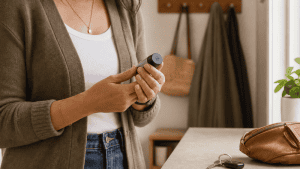
U.S. Legal in Most States • Discreet Shipping • Real-World Protection • No Permits Required in Most Areas
U.S. Legal in Most States • Discreet Shipping • Real-World Protection • No Permits Required in Most Areas

Pepper Spray Breakdown. How Does It Actually Work? Quick Answer: Pepper spray works by releasing a concentrated chemical compound called Oleoresin Capsicum (OC) that causes an immediate inflammatory reaction in the eyes, nose, throat, and skin. It triggers intense burning, temporary blindness, and difficulty breathing – effects that give you time to get away from a threat. It is non-lethal, widely legal for civilian carry, and one of the most accessible personal safety tools available today.
The active ingredient in pepper spray is Oleoresin Capsicum, commonly abbreviated as OC. It is a naturally occurring compound derived from hot chili peppers – the same family of plants that puts the heat in jalapeños and habaneros, just processed and concentrated to a degree that makes it effective as a deterrent. When people say “pepper spray,” they are really talking about a delivery system for this compound.
OC is measured on the Scoville Heat Unit scale, the same scale used to measure the spiciness of food. Most commercial pepper sprays used in law enforcement and civilian carry fall in a range that far exceeds even the hottest culinary peppers. That concentration is what makes it effective when it counts – not the delivery mechanism, not the canister size, but the quality and strength of the OC inside.
When you are choosing a pepper spray, pay attention to the OC percentage listed on the label. A product with a higher OC percentage is not automatically better – what matters is the combination of percentage and the heat rating of the OC used. Reputable products clearly state both, and that transparency is worth looking for when you are making your purchase decision.
Pepper spray causes an immediate and involuntary inflammatory response. The moment OC contacts the mucous membranes – eyes, nose, mouth, and throat – it triggers a cascade of reactions that the body cannot override with willpower alone. That is precisely what makes it effective regardless of a person’s size, pain tolerance, or mental state.
Here is what happens in the first few seconds after exposure:
These effects are temporary. Permanent damage from OC exposure is extremely rare. The goal of pepper spray is not to cause lasting harm – it is to create enough time and space for you to get yourself to safety. That is the whole point.
In most cases, the effects of pepper spray last between 30 and 45 minutes. That is more than enough time to leave the situation, call for help, and get to a safe location. The intensity of the effects typically peaks in the first few minutes and then gradually subsides as the OC is flushed or diluted by the body’s natural responses like tearing and mucus production.
Flushing the affected area with cool water and mild soap helps reduce recovery time. It is worth knowing that rubbing the eyes or skin actually worsens the sensation by spreading the compound further. The best advice – and what you would tell someone you care about – is to let the body flush it out with water and fresh air.
Not all pepper sprays spray the same way, and understanding the difference matters when you are choosing one to carry. The delivery pattern affects how the spray travels, how far it reaches, and how vulnerable you might be to blowback in wind conditions.
For everyday carry, stream and gel formulas are worth serious consideration. They give you meaningful range, reasonable accuracy, and lower risk of accidentally affecting yourself if you need to deploy in a breeze.
Most personal-sized pepper sprays carried for everyday use have an effective range of 8 to 15 feet depending on the formula and delivery type. Stream sprays tend to reach the farther end of that range. Gel and foam are typically a bit shorter. Cone and mist sprays can travel well but are more susceptible to wind reducing their effective range.
Range matters because distance is your friend in any threatening situation. Being able to deploy your spray before a threat is directly upon you gives you a meaningful advantage. Carry something that works at a safe distance, not something that only works at arm’s length.
In the United States, pepper spray is legal to carry for civilians in all 50 states, though some states have specific restrictions on canister size, OC concentration, or who can legally carry it. Many states also restrict carry by minors or individuals with prior felony convictions. A small number of states require pepper spray to be purchased only from licensed dealers.
Before you carry, take a few minutes to look up your state and local laws. This is genuinely easy to do, and it is the responsible thing to do. Knowing the rules in your area is part of being a prepared, thoughtful carrier rather than someone who just grabbed something off a shelf.
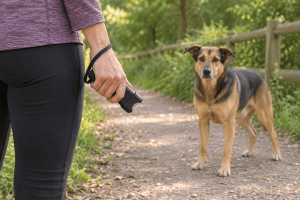
The most important principle of carry is accessibility. Pepper spray that is buried in a bag is not going to help you in the moment you need it. The people who benefit most from carrying pepper spray are the ones who have it somewhere they can reach it quickly – a front pocket, a keychain clip, a purse pocket designed for fast access.
A few habits that genuinely make a difference:
Carrying consistently matters more than carrying the fanciest option available. A simple, reliable canister that you actually have on you is worth more than a high-end product left at home.
Yes, but with more care than outdoor use. In an enclosed space, OC particles can linger in the air and affect unintended people, including you. Gel formulas are the best indoor option because they minimize airborne dispersal. If you deploy any pepper spray indoors, your priority after reaching safety is to ventilate the space – open windows and doors and leave the area as quickly as possible.
This is worth thinking about in advance rather than in the moment. If you spend time in environments where an indoor scenario is more likely – a parking garage, an office building, a college dorm – gel is worth considering specifically for those settings.
Pepper spray is effective on the vast majority of people because it triggers an involuntary physical response that cannot be overridden through willpower. However, individuals under the influence of certain substances or experiencing extreme psychological states may show reduced sensitivity. No defensive tool carries a 100% guarantee, which is why awareness and situational judgment always matter alongside any tool you carry.
“Mace” was originally a brand name for a CN tear gas-based product. Modern Mace brand products now typically contain OC or a combination of OC and tear gas. Pepper spray generally refers specifically to OC-based products. OC is widely considered more effective because it causes a physiological inflammatory response rather than just a chemical irritant response, making it more reliable across a broader range of individuals.
Check the expiration date printed on the canister – most products list it on the bottom or side. Typical shelf life is two to four years. You can also do a short test spray away from yourself and others to confirm the canister still has adequate pressure. If the spray is weak, sputters, or barely projects, it is time to replace it. Expired carry tools are a false sense of security.
Wind is a genuine consideration, especially with cone and mist spray patterns. Stream and gel formulas are significantly less affected by wind because they project a directed stream rather than dispersing into the air. If you spend a lot of time outdoors or in open environments, a stream or gel formula is a more reliable choice for consistent accuracy regardless of weather conditions.
No. The TSA prohibits pepper spray in carry-on luggage. A single canister of up to 4 fluid ounces with no more than 2% OC concentration is permitted in checked baggage, provided the safety mechanism prevents accidental discharge. If you are traveling and want to have pepper spray at your destination, check it rather than carry it on, and verify current TSA guidelines before your trip.
Flush the affected area thoroughly with cool water and mild soap. Fresh air helps significantly – get outside or near a window as quickly as possible. Avoid rubbing the skin or eyes, as this spreads the compound and intensifies the sensation. Most effects subside within 30 to 45 minutes. Seek medical attention if breathing difficulties persist or if there is a known sensitivity to the compound.
For most people, a canister in the half-ounce to one-ounce range hits the right balance between portability and practical use. These sizes are easy to carry on a keychain or in a pocket and typically provide enough volume for multiple short bursts. Larger canisters carry more OC but sacrifice convenience – and a tool you leave at home because it is inconvenient offers no protection at all.
Many quality pepper sprays include a UV-detectable dye that marks an attacker under ultraviolet light. This can be useful for law enforcement identification purposes after an incident. It does not change how the spray performs in the moment, but it is a practical feature that adds value without any drawback. If two products are otherwise similar, choosing one with UV dye is a sensible decision.
Understanding how pepper spray works is not about preparing for worst-case scenarios every time you leave the house. It is about being the kind of person who has thought things through calmly and made a reasonable, informed choice. Pepper spray is affordable, accessible, non-lethal, and legal in most places. For a lot of people, it is the first real step toward feeling genuinely prepared rather than just hoping things will be fine.
If you are new to carrying pepper spray, start simple. Choose a reputable product in a format you will actually carry – keychain, pocket clip, or bag pouch – learn how it works, and make it part of your daily routine. Consistent carry beats perfect gear every single time. And if you ever have questions about what to choose or how to carry responsibly, that is exactly the kind of conversation we are here for at Nittany Self Defense.






We use cookies to improve your experience on our site. By using our site, you consent to cookies.
Manage your cookie preferences below:
Essential cookies enable basic functions and are necessary for the proper function of the website.
These cookies are needed for adding comments on this website.
Statistics cookies collect information anonymously. This information helps us understand how visitors use our website.
Google Analytics is a powerful tool that tracks and analyzes website traffic for informed marketing decisions.
Service URL: business.safety.google (opens in a new window)