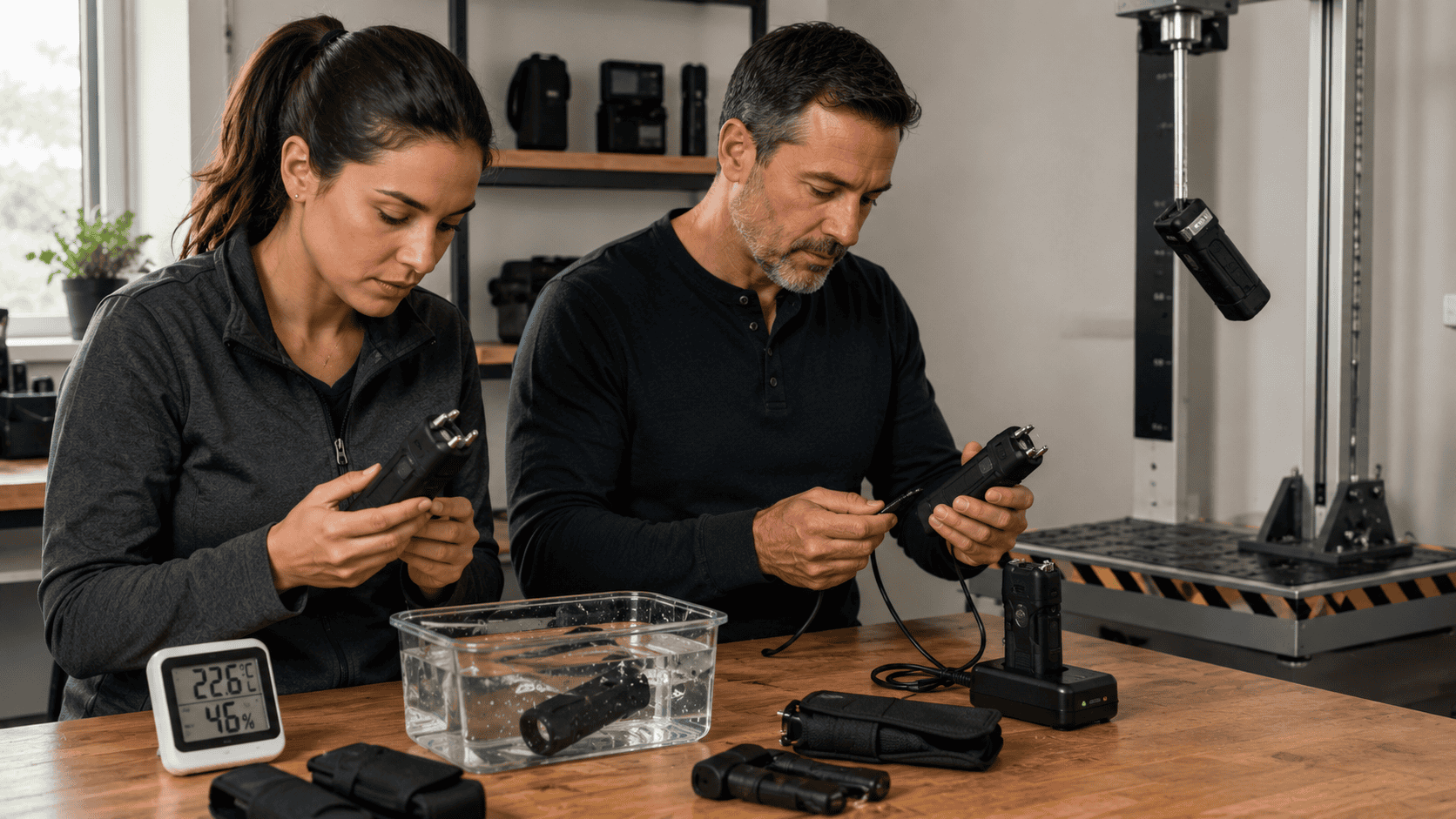
What about stun gun durability? Modern stun guns are designed to be compact, portable, and dependable. But before many models ever reach store shelves, they are often evaluated for durability, battery performance, and reliability under a variety of conditions.
From impact resistance to charging consistency, these tests help manufacturers determine how well a device may hold up during everyday handling and storage.
Why Durability Testing Matters
A stun gun is a device people expect to function properly when needed. That is why durability and reliability are important parts of the design process.
Testing helps evaluate how a stun gun performs after repeated handling, charging cycles, accidental drops, temperature changes, and exposure to normal environmental conditions.
While no electronic device is indestructible, better-built stun guns are generally designed to withstand routine everyday use more effectively than lower-quality models.
Impact and Drop Testing
One common durability test involves controlled drop testing. Manufacturers may drop a stun gun from different heights onto surfaces such as concrete, hardwood, or tile to see how the casing and internal components respond.
These tests help evaluate:
- Outer casing strength
- Internal component stability
- Battery connection reliability
- Button and switch durability
Minor cosmetic scuffs may occur during testing, but the primary goal is determining whether the device continues functioning properly afterward.
Temperature and Moisture Resistance
Electronic devices can be affected by extreme temperatures and moisture, so many stun guns are also evaluated under different environmental conditions.
Some tests expose devices to hot or cold temperatures to see whether battery performance or electrical output changes significantly. Others evaluate how the device handles humidity or light moisture exposure during routine use.
Although some models offer improved weather resistance, stun guns should still be stored in dry conditions and protected from heavy water exposure whenever possible.
Battery and Charging Reliability
Rechargeable stun guns rely heavily on battery condition and charging consistency. As part of reliability testing, manufacturers may evaluate:
- Battery charging cycles
- Voltage consistency
- Charging cord durability
- Long-term battery performance
Over time, rechargeable batteries naturally wear down. Regular charging and proper storage can help extend battery life and maintain consistent performance.
Internal Electrical Component Testing
In addition to exterior durability, manufacturers also evaluate the reliability of internal electrical components.
This may include testing switches, electrodes, wiring connections, and internal circuitry to help verify that the device continues operating after repeated activations and charging cycles.
Reliable internal construction can help reduce the risk of inconsistent performance or charging issues over time.
How Everyday Use Affects Longevity
Like most electronic devices, stun guns experience wear over time. Frequent charging, repeated testing, accidental drops, and improper storage can all affect long-term durability.
Higher-quality models often use stronger casings, improved battery systems, and more durable internal components that may help extend overall lifespan.
Regular maintenance and proper storage habits can also make a significant difference in long-term reliability.
Simple Maintenance Tips
Keeping a stun gun in good condition does not require complicated maintenance. A few basic habits can help support long-term performance:
- Charge the device according to manufacturer recommendations.
- Store it in a cool, dry location.
- Inspect charging cords periodically for damage.
- Keep the exterior clean and dry.
- Avoid unnecessary exposure to moisture or extreme temperatures.
Choosing a Well-Built Stun Gun
Not all stun guns are built the same. Construction quality, battery design, casing materials, and overall engineering can vary significantly between models.
When comparing products, shoppers often look for:
- Rechargeable battery systems
- Durable exterior casings
- Built-in safety features
- Reliable charging accessories
- Established product reviews and reputation
A well-built stun gun may offer better long-term reliability and easier maintenance over time.
Frequently Asked Questions
How durable are modern stun guns?
Many modern stun guns are designed to handle normal everyday use, including routine handling, charging, and occasional minor impacts. Durability varies depending on construction quality and model design.
Can moisture damage a stun gun?
Yes. Excessive moisture or water exposure can damage internal electronic components. Most stun guns should be stored in dry conditions and protected from heavy rain or water immersion.
How often should a stun gun be charged?
Charging schedules vary by model. Many rechargeable stun guns benefit from periodic charging to help maintain battery readiness and long-term performance.
Do rechargeable stun gun batteries wear out over time?
Yes. Like most rechargeable electronics, stun gun batteries gradually lose capacity over time and may eventually require replacement or reduced charging intervals.
How should a stun gun be stored?
Stun guns are generally best stored in a cool, dry place away from excessive heat, moisture, and direct sunlight.
Final Thoughts
Durability testing plays an important role in evaluating how stun guns perform under normal handling and environmental conditions. From impact resistance to charging reliability, these tests help manufacturers assess long-term functionality and consistency.
Proper storage, regular charging, and routine maintenance can also help support reliable performance over time. Whether you are purchasing your first stun gun or replacing an older model, understanding durability and reliability factors can help you make a more informed decision.