
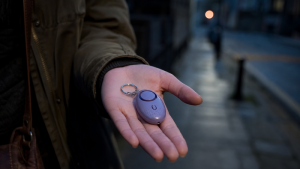
U.S. Legal in Most States • Discreet Shipping • Real-World Protection • No Permits Required in Most Areas
U.S. Legal in Most States • Discreet Shipping • Real-World Protection • No Permits Required in Most Areas
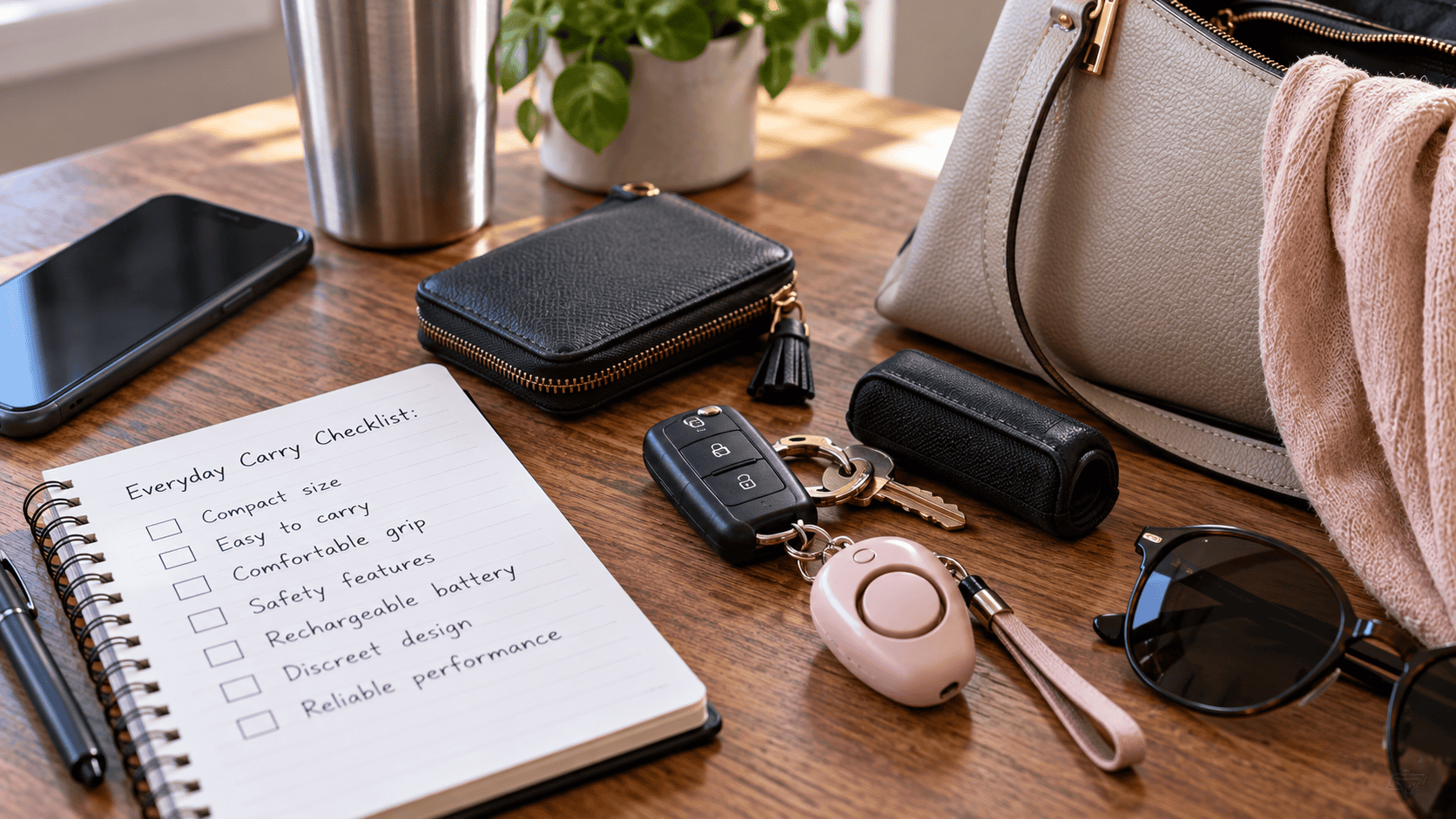
Compact stun guns appeal to people who want a personal safety device that is small enough to carry without becoming a burden. They can fit into a pocket, purse, bag, or compatible holster more easily than many larger models, which can make them practical for everyday carry.
But smaller doesn’t automatically mean better. A compact stun gun still needs to be comfortable to hold, straightforward to operate, properly maintained, and appropriate for the way you actually intend to carry it. Size is only one part of the decision.
Look for a compact stun gun that balances portability with comfortable handling and understandable controls. Consider its dimensions, grip, safety mechanism, battery or charging system, carry options, construction, and useful secondary features such as a flashlight. The best compact model is one that is small enough for your preferred carry method without becoming awkward or unnecessarily difficult to handle.
There isn’t one universal size that defines a compact or mini stun gun. The terms generally describe smaller devices designed with portability in mind.
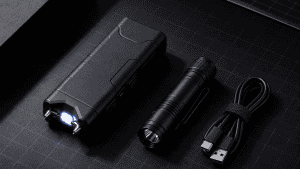
Depending on the model, a compact stun gun might use a traditional rectangular handheld design, attach to a keychain, resemble another everyday object, or incorporate a flashlight. What these designs generally have in common is an emphasis on reducing size and weight.
Traditional compact stun guns remain direct-contact devices. Their smaller dimensions don’t change that basic operating characteristic, so size should be evaluated primarily as a matter of carry convenience, handling, and storage rather than as a measure of effectiveness.
The biggest advantage is straightforward: portability.
A smaller stun gun may be easier to incorporate into the way you already carry everyday items. Depending on its design, it might fit into a dedicated purse compartment, jacket pocket, small bag, compatible holster, or another secure location without taking up much space.
That can matter because a personal safety product that is consistently inconvenient to carry may simply end up staying at home.
Compact designs can also be useful when storage space is limited. But convenience shouldn’t come at the expense of a comfortable grip, clear controls, or safe storage.
Yes. Extremely small dimensions aren’t necessarily an advantage for every person.
A device that fits easily into a pocket may also have a shorter grip or controls positioned closer together. Someone with larger hands—or anyone who finds small switches difficult to operate—may prefer a somewhat larger model even if it takes up more space.
Consider how the device feels in your hand, where the safety and activation controls are located, and whether its shape provides enough gripping surface for you to handle it comfortably.
The goal isn’t to find the smallest stun gun possible. It’s to find a size that provides a useful balance between portability and usability.
Your intended carry method should influence the size and style you choose.
If you plan to keep a compact stun gun in a purse or bag, consider whether there is a dedicated compartment where it can remain secure and reasonably accessible rather than becoming buried underneath other belongings.
For pocket carry, dimensions and control protection become especially important. You don’t want ordinary movement or other objects pressing against exposed controls.
A compatible holster can provide another option for some models. The holster should fit the particular device securely without interfering with its controls or intended operation.
Our stun gun accessories guide covers holsters, wrist straps, disable pins, chargers, and compatibility in more detail.
Someone considering a compact stun gun for walking, jogging, or similar activities may place extra importance on weight, secure carrying, and ease of access. A device that feels manageable at home may become inconvenient if it bounces, shifts, or interferes with normal movement.
Look at the complete carrying setup rather than size alone. Depending on the model, a compatible holster, secure attachment point, wrist strap, or other carrying option may make a compact device more practical. Features such as a built-in flashlight can also be useful for ordinary visibility during early-morning or evening activities.
Whatever model you consider, it should be carried securely and in accordance with applicable laws. Familiarize yourself with its controls before carrying it and follow the manufacturer’s instructions for storage, charging, inspection, and safe handling.
Compact size doesn’t eliminate the importance of ergonomics. In fact, it can make control layout even more important because manufacturers have less space in which to position switches and buttons.
Look at the shape of the grip, surface texture, safety mechanism, activation control, and any flashlight controls. A straightforward layout that you can understand is generally more useful than a design that packs numerous features into a very small space but becomes confusing to operate.
Some models use textured or rubberized gripping surfaces, while others rely primarily on the shape of the housing. Neither approach is automatically superior; what matters is whether the device feels appropriate for your hand.
Compact stun guns can incorporate many of the same safety features found on larger devices. Depending on the model, these may include a safety switch, protected activation control, wrist strap, or removable disable pin.
Pay particular attention to how the device is prevented from activating unintentionally while being carried or stored. This becomes especially relevant for something intended to spend time inside a pocket, purse, or bag.
If a model uses a disable-pin wrist strap, remember that this is different from an ordinary retention lanyard. Removing the pin on a compatible device makes the stun gun inoperable until the pin is reinserted.
For a closer look at these systems, see our guide to stun gun safety features.
Many compact stun guns use built-in rechargeable batteries because that design eliminates the need to provide space for easily accessible replaceable batteries. Other models may use replaceable cells.
The important consideration isn’t simply which system sounds more convenient. Think about how the device will be maintained and follow the manufacturer’s instructions for charging, battery replacement, testing, and storage.
A compact device that is easy to carry still requires attention to its power source. There is no universal charging schedule that applies to every rechargeable stun gun.
A flashlight can be a particularly useful secondary feature on a compact stun gun because it gives the device an everyday function unrelated to its electrical capability.
It can provide illumination when walking in a dark area, finding a lock, looking inside a vehicle, or dealing with a power outage. For some owners, that additional utility may make a flashlight-style device more practical to keep nearby.
Don’t judge the entire stun gun by the flashlight, however. Consider whether adding the feature changes the size, controls, battery demands, or overall usability in ways that matter to you.
Some compact models combine the stun function with a personal alarm or siren. An alarm provides a separate way to draw attention during an emergency and may be useful independently of the electrical function.
As with a flashlight, an alarm should be considered as one part of the overall design rather than a reason by itself to choose a particular model. Look at how the alarm is activated, whether the controls remain straightforward, and whether the additional feature makes the device more or less practical for your intended carry method.
No. Compact stun guns are often marketed with dramatic voltage claims, but the largest advertised number shouldn’t be the deciding factor.
Size and advertised voltage don’t tell you everything about the quality or suitability of a device. Manufacturer support, construction, battery condition, safety controls, grip, warranty, documentation, and overall usability deserve consideration as well.
Our guide to stun gun voltage vs. amperage explains why advertised electrical specifications should be viewed in context rather than treated as a simple product ranking.
Small size and a low price can make compact models attractive, but neither tells you much about product quality.
Look for an identifiable manufacturer, clear operating and charging instructions, warranty information, understandable safety controls, sound construction, and customer support. If compatible accessories or replacement components are required, consider their availability as well.
Be cautious about products marketed primarily through extraordinary voltage claims or promises about what the device will always do in an emergency.
For more detail, see How to Spot a Quality Stun Gun — And the Red Flags That Tell You to Walk Away.
They can be, but compact stun guns aren’t inherently “women’s” devices. Individual hand size, grip preference, carry method, weight, control layout, and personal comfort are more useful considerations than gender-specific marketing.
Some women may prefer a smaller model for purse or pocket carry, while others may find a larger grip more comfortable. The same differences apply to men.
Our guide to choosing a stun gun for women explores those individual fit and carry considerations more closely.
Not every compact stun gun is designed the same way. Some are simply smaller versions of conventional handheld stun guns, while others are designed to resemble everyday objects such as keychain accessories or cosmetic items.
A disguised appearance shouldn’t be the deciding factor by itself. Consider whether the device is comfortable to hold, whether its controls and safety mechanisms are easy to understand, how it will actually be carried, and whether its design is permitted where you live or travel.
Disguised or unusually shaped devices may also raise legal or location-specific considerations that don’t necessarily apply in the same way to every conventional stun gun. Check current state and local requirements before purchasing or carrying one.
Once you’ve chosen a compact stun gun, read the manufacturer’s instructions and become familiar with its controls, safety system, charging or battery requirements, and storage recommendations.
Keep the device in a secure location where its controls are protected from unintended activation and where children or unauthorized users cannot access it. Inspect it periodically for obvious physical damage and follow the manufacturer’s recommendations for maintaining its battery or charge.
Compact size makes storage easier, but it doesn’t eliminate the responsibilities that come with owning the device.
Stun gun laws can vary by state and locality, including rules concerning purchase, possession, carrying, age requirements, and restricted locations. Compact size or a disguised appearance doesn’t exempt a device from applicable laws.
Check the current requirements where you live and anywhere you plan to carry or transport the device. Our overview of stun gun legality provides a useful starting point.
They can be, depending on your needs. Compact models offer easier carrying and storage, while somewhat larger models may provide more gripping surface or room for controls. The best choice depends on your hand size, carry method, and preferences.
There isn’t one ideal size for everyone. Look for a model small enough for your intended pocket, purse, bag, or holster while still providing a comfortable grip and controls that you can understand and operate properly.
Where legal, a purse can be a practical carry method, but the device should be stored securely rather than loose or buried underneath other items. Consider a dedicated compartment or compatible carrying accessory and make sure the controls are protected from unintended activation.
Rechargeable models can be convenient because they eliminate routine replacement-battery purchases, but they still require proper charging and storage. Follow the manufacturer’s instructions for the particular battery system in your device.
A flashlight can add useful everyday illumination without requiring a separate device. Whether it is worthwhile depends on your needs and whether the flashlight, its controls, and its battery demands fit the overall design you want.
Not automatically. Advertised voltage alone isn’t a reliable way to compare stun guns. Consider manufacturer support, construction, battery condition, safety controls, grip, warranty, documentation, and overall usability as well.
Laws vary by state and locality. Rules may address purchase, possession, carrying, age requirements, and restricted locations. Check the current laws that apply where you live and wherever you plan to carry or transport the device.
A compact stun gun should be small enough to fit naturally into your preferred carry or storage method without sacrificing comfortable handling, understandable controls, appropriate safety features, or overall quality.
Don’t shop for the smallest device simply because it is small, and don’t choose one based solely on an enormous advertised voltage number. Think instead about hand fit, control layout, battery system, safety features, flashlight or alarm functions, manufacturer support, and how you will realistically carry and maintain the device.
The right compact stun gun is ultimately the one whose size makes it convenient without making it difficult for you to handle responsibly.







We use cookies to improve your experience on our site. By using our site, you consent to cookies.
Manage your cookie preferences below:
Essential cookies enable basic functions and are necessary for the proper function of the website.
These cookies are needed for adding comments on this website.
Statistics cookies collect information anonymously. This information helps us understand how visitors use our website.
Google Analytics is a powerful tool that tracks and analyzes website traffic for informed marketing decisions.
Service URL: business.safety.google (opens in a new window)