
U.S. Legal in Most States • Discreet Shipping • Real-World Protection • No Permits Required in Most Areas
U.S. Legal in Most States • Discreet Shipping • Real-World Protection • No Permits Required in Most Areas

What about self defense training? Well, you don’t need a black belt or hours of martial arts training to make a keychain self-defense tool a worthwhile part of your daily carry. These compact tools are designed to give untrained, everyday people a meaningful advantage in a sudden, close-range threat — buying critical seconds to escape, create distance, or attract attention. That said, understanding exactly what they do, how they work, and what their real limitations are is the difference between a smart safety choice and a false sense of security.
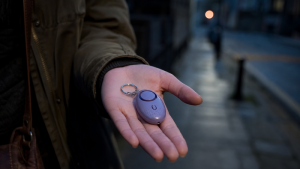
A keychain self-defense tool is any compact, lightweight device designed to be carried on or attached to your keys so it’s always within reach. The most common types include kubotan-style striking rods, personal alarm keychains, cat ear knuckle tools (also called self-defense keychains), mini pepper spray canisters, and DNA-capture rings. Each one serves a slightly different purpose, but they share a common mission: giving ordinary people a quick, accessible option when something suddenly feels wrong. Because they live on your keyring, they’re not sitting in a drawer at home when you actually need them.
The honest answer is that lack of training matters — but not as much as you might think for the specific tools designed with untrained users in mind. Complicated weapons require muscle memory built through repetition. A personal alarm requires zero skill: you pull a pin and 130 decibels does the work. A kubotan can reinforce a grip or allow you to deliver a more effective strike even without formal technique. A cat ear keychain concentrates force from a natural fist. The point isn’t to win a fight — it’s to create enough disruption, noise, or pain compliance to break away and run. That goal is absolutely achievable without a training certification.
Not all keychain tools carry the same skill floor. Here’s a ranked breakdown by ease of effective use for someone with zero formal training:
This is where honesty matters most. A keychain tool is not a magic wand, and pretending otherwise does a disservice to the people carrying them. Here are the limitations you need to take seriously:
Preparation without professional training is still meaningful preparation. Follow this checklist to maximize the effectiveness of any keychain self-defense tool you carry:
It can — but only if you let it. The risk of false confidence is real, and it’s worth naming directly. If carrying a cat ear keychain makes you feel so safe that you stop paying attention to your surroundings, walk through poorly lit areas alone at midnight, or ignore gut feelings about a situation, you’ve traded actual safety for an illusion of it. Awareness is your first and most powerful defense tool — no keychain replaces it. What a good tool does is give you one more option in the moment when awareness wasn’t enough. Think of it as a seatbelt: it doesn’t make reckless driving safe, but you’re genuinely glad it’s there when you need it.
Check out all the self defense keychains available at Nittany Self Defense.
And watch this informative video about the Kubotan self defense keychain.
No, and this is one of the most commonly overlooked aspects of everyday carry. Laws vary significantly by state, county, and even city. Here’s what to check before you carry any keychain self-defense tool:
When in doubt, start with a personal alarm and add other tools once you’ve confirmed their legality in your jurisdiction. A legal tool you carry confidently is always better than a restricted tool that gets you into trouble.
Yes, especially for tools with a low skill requirement like personal alarms and mini pepper sprays. These tools are designed to be used under stress by people without formal training. The key is to understand the goal — creating distance and escaping — not engaging in a prolonged fight. Familiarity with your specific tool, even from a few minutes of at-home practice, dramatically improves your ability to deploy it when it matters.
A personal alarm keychain is the safest starting point for anyone new to self-defense tools. It requires no physical contact, no aim, and no technique — just the will to activate it. It poses no legal risk and no risk of being used against you. A 120–130 decibel alarm is genuinely disorienting to an attacker and draws immediate attention from bystanders, both of which are powerful deterrents in real-world situations.
Carrying two complementary tools — such as a personal alarm plus a mini pepper spray — gives you layered options across different types of situations. The alarm handles situations where you want to attract attention without physical confrontation; the pepper spray handles close, immediate threats. More than two tools can become confusing under stress and slow your reaction time. Keep it simple, purposeful, and practiced.
The answer is pre-positioning and habit. Before you enter any environment that feels uncertain — a parking lot, a garage, a walking path at night — transfer your tool to your dominant hand rather than leaving it attached to your keys in your pocket or bag. Once it becomes a reflex, you won’t have to think about it. A tool you can access in under a second is dramatically more effective than one you have to fish for.
It can cause enough pain to create an escape window, which is the actual goal. The cat ear design concentrates force to two points on impact, increasing the effect of even a basic, untrained strike. Target vulnerable areas like the nose, throat, or collarbone rather than relying on raw power. You’re not trying to knock anyone out — you’re trying to create enough of a pain reaction to break contact and run to safety.
Start with a personal alarm — it bypasses the psychological hesitation that can freeze people in a physical confrontation. The willingness to activate a loud alarm is a much lower mental barrier than striking someone. As you build comfort and confidence with carrying a tool, you can layer in additional options. Confidence grows from familiarity, so regularly handling and practicing with whatever you carry is the most practical way to prepare.
Yes, and being honest about this matters. If a threat is already in physical contact before you have any warning, deploying a tool becomes very difficult. Tools stored in bags rather than on the body are nearly impossible to access in time. No tool compensates for walking with your eyes on your phone in an unfamiliar area. Situational awareness — noticing your environment and trusting your instincts early — is always the first layer of defense, with any tool acting as a backup.
Personal alarms should have their batteries tested monthly and replaced as soon as output weakens. Pepper spray canisters have printed expiration dates — typically two to four years — and should be replaced before they expire, since the propellant degrades over time and can affect spray distance and reliability. Inspect physical tools like kubotans or cat ear keychains periodically for cracks or wear, especially at attachment points to the keyring.
You don’t have to be a trained fighter to benefit from carrying a keychain self-defense tool. The right tool, chosen for your comfort level and legal environment, carried consistently and accessibly, gives you a real and meaningful option in a moment when seconds matter. The goal was never to win a fight — it was always to give you a chance to get away safely. That goal is completely realistic, even without a single day of formal training, as long as you choose wisely, carry intentionally, and keep your awareness sharp. A keychain tool won’t replace good judgment, but paired with it, it’s one of the smartest small investments you can make in your everyday safety.
Until later…..







We use cookies to improve your experience on our site. By using our site, you consent to cookies.
Manage your cookie preferences below:
Essential cookies enable basic functions and are necessary for the proper function of the website.
These cookies are needed for adding comments on this website.
Statistics cookies collect information anonymously. This information helps us understand how visitors use our website.
Google Analytics is a powerful tool that tracks and analyzes website traffic for informed marketing decisions.
Service URL: business.safety.google (opens in a new window)