
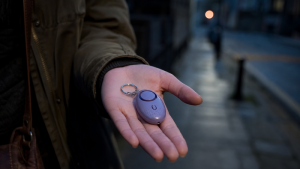
U.S. Legal in Most States • Discreet Shipping • Real-World Protection • No Permits Required in Most Areas
U.S. Legal in Most States • Discreet Shipping • Real-World Protection • No Permits Required in Most Areas
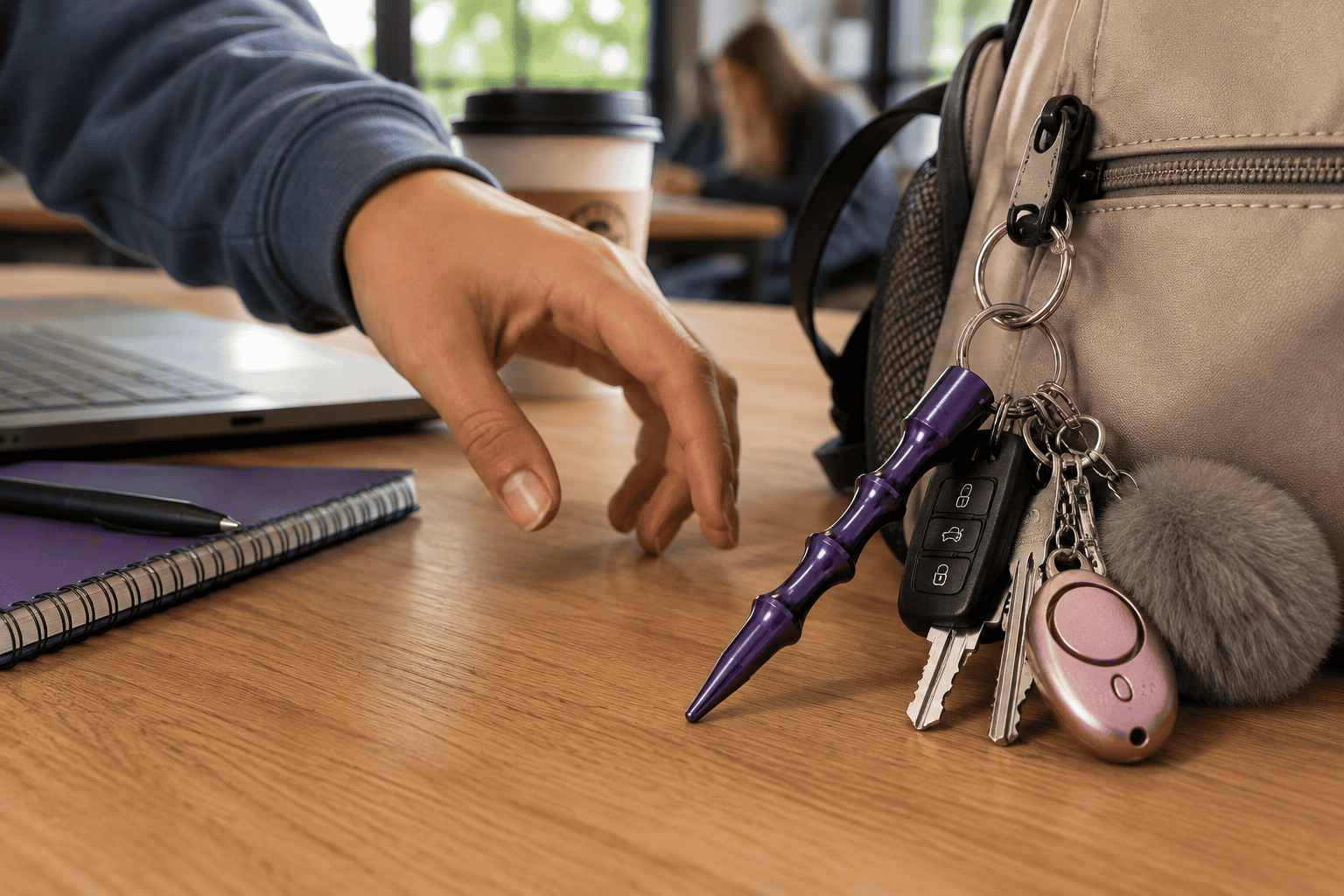
So what are the best self defense keychains for college students? They are compact, legal in most states, easy to carry every day, and require very little training to use effectively. Making them one of the smartest personal safety investments you can make before heading to campus. Options like personal alarm keychains, pepper spray keychains, and kubotan-style finger grip tools give students practical layers of protection. Fitting right onto a backpack zipper or house key ring. Choosing the right one depends on your campus rules, your state’s laws, and your own comfort level. This guide walks you through exactly what to look for so you can make a confident, informed choice.
College students face a unique combination of risk factors: late-night walks across campus, unfamiliar neighborhoods, shared housing, packed parking garages, and the general distraction that comes with juggling classes, work, and social life. A self-defense keychain solves a real problem — it’s always with you because it lives on your keys. You don’t have to remember to grab it before heading to the library at midnight or walking to your car after a late shift. It’s just there.
Beyond convenience, most self-defense keychains are affordable, discreet, and designed for everyday people — not security professionals or martial artists. You don’t need any special training to press a button on a personal alarm or deploy a keychain pepper spray. That low barrier to use is critically important in a real-world situation where stress and adrenaline make fine motor skills unreliable.
Here’s a quick look at why keychains specifically outperform other carry options for students:
There are several distinct categories of self-defense keychains, and each one works differently. Understanding what each type does — and doesn’t do — is essential before you buy. The wrong tool for the wrong situation can give you a false sense of security, which is actually more dangerous than no tool at all.
A personal alarm keychain is the most universally accessible self-defense tool available. It works by emitting a piercing 120–130 dB alarm when you pull a pin or press a button — loud enough to draw attention from a significant distance and startle a potential attacker. These are legal in all 50 states, have no age restrictions, and require zero physical confrontation. They’re an excellent first layer of protection for any student, especially freshmen who are still figuring out campus geography and safety culture. Look for models that include a built-in LED light, since low-visibility situations are when you’re most vulnerable.
Key warning: A personal alarm works by attracting help — it’s most effective in populated areas. If you spend time in isolated locations late at night, pair it with a secondary tool.
Keychain pepper spray puts a powerful defensive tool in a form factor that weighs just a few ounces. Quality formulas contain oleoresin capsicum (OC) at concentrations that cause immediate eye closure, intense burning, and temporary respiratory distress — giving you critical seconds to get away from a threat. Many keychain units include a flip-top safety cap to prevent accidental discharge and a UV dye that can help law enforcement identify an attacker later.
Critical checklist before you buy pepper spray:
A kubotan is a short, rigid rod — typically 5–6 inches long — that attaches to your keyring and gives you a hardened striking and pressure-point tool. Finger grip keychains are a modern variation designed to fit between the fingers, concentrating force in a palm strike. These tools require a bit more awareness and practice to use effectively compared to alarms or sprays, but they’re silent, never expire, and work in any weather conditions. They’re also generally legal in more places than edged weapons, though laws vary — always verify before carrying.
Important note: A kubotan or finger grip tool is a contact-range defensive option. It puts you in proximity to a threat. If you choose this type of keychain, invest some time in watching instructional videos or taking a basic self-defense class to understand proper deployment.
Some keychains combine a personal alarm with a built-in light, or pair a pepper spray canister with a finger grip housing. Multi-tool options are appealing because they consolidate your safety gear, but make sure the combination doesn’t compromise usability. In a stressful moment, you need to be able to access the right function instantly. If a tool is confusing to operate under pressure, it becomes a liability. Choose simplicity over complexity whenever possible.
Browse all self defense keychains available at Nittany Self Defense.
And watch this helpful video demonstrating a popular keychain model. The Kubotan self defense keychain.
The right self-defense keychain is the one you’ll actually carry, actually know how to use, and that’s actually legal where you are. Use this checklist to narrow down your options before you buy:
Owning a self-defense keychain is only half the equation — knowing how and when to use it is what makes it genuinely protective. Every student who carries one of these tools should do three things immediately after purchase.
Also make this a habit: when you’re walking alone at night, have your keychain tool already in your hand, not in your pocket or buried in your bag. Situational awareness is your first defense, but access speed is your second.
The legal picture varies significantly by state, city, and individual campus — and getting this wrong has real consequences. Here’s the clearest breakdown of what you need to know before carrying any self-defense keychain on campus.
Bottom line: Never assume a tool is allowed on campus because it’s legal in your state. Campus policy and state law are two separate layers of rules, and both apply to you.
A self-defense keychain is a tool, not a strategy. The most effective personal safety plan layers tools with habits and awareness. Here are the practices that make the biggest difference:
A personal alarm keychain is the absolute best starting point for anyone with no prior self-defense training. It requires no physical skill, no legal research, and no practice to deploy effectively. Just pull the pin or press the button and the alarm does the work — attracting attention and startling a potential attacker while you move to safety. It’s also legal on every campus in the country.
That depends on two things: your state’s laws and your school’s specific campus policy. Pepper spray is legal for adults in all 50 states, but many campuses prohibit it in dorms, academic buildings, or on campus property entirely. Before you carry it, check your student handbook or contact campus public safety. When in doubt, email them — you’ll get a clear written answer you can refer back to.
Choose a model with a flip-top safety cap or a locking actuator — these are specifically designed to prevent accidental discharge during normal carry. Never store pepper spray loosely at the bottom of a bag where other items can press against the nozzle. Keep it clipped to an exterior zipper pull or accessible pocket, both for safety and for fast access when you actually need it.
A traditional kubotan is a cylindrical rod you hold in your fist to reinforce strikes or apply pressure-point techniques. A finger grip keychain — sometimes called a cat keychain or knuckle keychain — is designed to fit between your fingers, concentrating force in a palm strike. Both are contact-range tools that require some basic understanding of how to use them. Neither requires a black belt, but both benefit from at least a few practice sessions.
Yes — a 120–130 dB alarm is roughly equivalent to a jet engine at close range or a car horn right next to your ear. That level of noise is disorienting and attention-grabbing, which is exactly the point. Attackers rely on speed and surprise; a sudden, piercing alarm shatters both. It also immediately signals to bystanders that something is wrong, which is your fastest path to help in any populated area.
Most keychain pepper spray formulas remain effective for two to four years from the manufacture date, which is typically printed on the canister. After that point, the propellant may weaken and the formula can degrade, reducing its effectiveness. Write the expiration date somewhere visible or set a phone reminder so you replace it on time. Carrying expired spray gives you false confidence — always keep it current.
Yes — transparency with people close to you is a smart safety habit. Your roommate should know what tools you carry and where you keep them, especially pepper spray, in case of an accidental exposure or an emergency. Letting trusted people know about your safety tools also reinforces a culture of preparedness in your friend group, which benefits everyone. Preparedness shared is preparedness multiplied.
Absolutely. Personal alarm keychains are accessible to virtually everyone — they require minimal grip strength and just one simple motion to activate. Pepper spray with a flip-top cap is similarly easy to deploy. If grip strength or mobility is a concern, look for tools with ergonomic designs, larger actuator buttons, or pull-pin activation rather than press-and-hold designs. Self-defense tools should be accessible to everyone, and there are solid options for a wide range of physical abilities.
Campus life comes with real risks — and a self-defense keychain is one of the simplest, most practical steps you can take to feel genuinely prepared rather than just hoping for the best. Whether you start with a personal alarm, add a keychain pepper spray, or explore a kubotan-style grip tool, the most important thing is choosing something you’ll actually carry, learn to use, and feel confident with. Layer your tools with solid habits — awareness, lighting, trusted contacts, and a plan — and you’re not just prepared, you’re empowered.
Take a look at the self-defense keychains available at Nittany Self Defense and find the right fit for your routine, your campus, and your comfort level. Your safety is worth the five minutes it takes to make a thoughtful choice.
Until later…..






We use cookies to improve your experience on our site. By using our site, you consent to cookies.
Manage your cookie preferences below:
Essential cookies enable basic functions and are necessary for the proper function of the website.
These cookies are needed for adding comments on this website.
Statistics cookies collect information anonymously. This information helps us understand how visitors use our website.
Google Analytics is a powerful tool that tracks and analyzes website traffic for informed marketing decisions.
Service URL: business.safety.google (opens in a new window)