
U.S. Legal in Most States • Discreet Shipping • Real-World Protection • No Permits Required in Most Areas
U.S. Legal in Most States • Discreet Shipping • Real-World Protection • No Permits Required in Most Areas
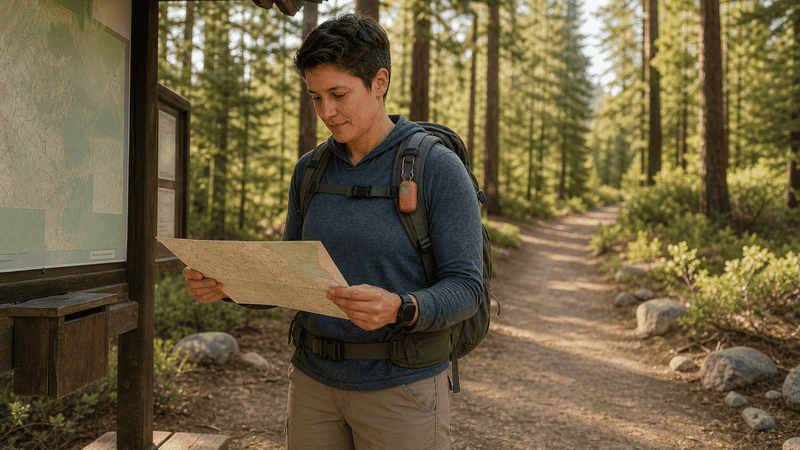
Personal alarms are effective, reliable tools for deterring threats and drawing attention — but in remote areas, their usefulness depends entirely on one variable: whether there is anyone within earshot to hear them. A 130dB alarm can stop a threat in an urban park or a college campus. On a backcountry trail three miles from the nearest trailhead, that same alarm may go completely unanswered. Understanding where personal alarms work, where they don’t, and how to build a layered plan around them is what separates prepared hikers and travelers from those who find out too late that one tool isn’t enough.
This is not a reason to abandon personal alarms — it’s a reason to understand them accurately. The goal here is to give you a clear, honest picture of what a personal alarm does well, what its real-world limitations are in low-population environments, and what backup options belong in your kit alongside it. You’ll leave this post with a plan you can actually rely on.
A personal alarm functions by emitting an extremely loud, sustained sound — typically between 120dB and 140dB — designed to startle an attacker, attract nearby help, and signal distress. In dense environments, that sound travels through walls, streets, and crowds, reaching potential witnesses within seconds. In remote environments, the same physics apply, but the audience doesn’t exist at the same density.
That said, personal alarms still serve real functions in backcountry and remote settings. First, the disorienting effect on an attacker does not depend on population density. A 130dB blast at close range is physically jarring regardless of where you are — it disrupts focus and creates a critical window to create distance. Second, personal alarms are effective as wildlife deterrents in certain situations, particularly against animals that are startled by sudden noise rather than conditioned to human sounds.
Third, and often overlooked: personal alarms are signal devices in remote areas where sound carries farther than it does in noise-polluted urban environments. On a quiet mountain trail, 130dB can travel a meaningful distance. If a hiking partner is within that range, or a ranger station is closer than you think, the alarm does its job. The honest limitation is that you cannot guarantee that range contains anyone who can respond.
If you spend time on trails, check out our resources on personal alarms for travelers — the same decision framework applies whether you’re navigating a foreign city or a remote national forest.
The core limitation is response dependency. A personal alarm is a communication device. It communicates distress. If no one receives that communication, the deterrent effect is reduced to the immediate, physical shock of the sound itself — which is still meaningful, but not the complete picture the alarm was designed to deliver.
In remote areas, you’re also more likely to encounter threats that don’t respond to social pressure the same way a human attacker in an urban environment might. Wildlife — bears, coyotes, mountain lions — operates on entirely different stimulus-response patterns than a human criminal who fears being witnessed. A bear encounter may or may not be deterred by sudden noise depending on the bear’s conditioning, the distance, and whether it feels cornered.
There’s also the weather and terrain variable. Wind, rain, dense tree cover, and canyon walls all affect how sound travels. A 130dB alarm rated at open-air distance measurements may perform significantly differently in a tight ravine or during a windstorm. These are not reasons to leave your alarm at home — they’re reasons to calibrate your expectations and layer your tools accordingly.
One more honest reality: personal alarms require activation. In a sudden fall, a medical emergency, or any situation where your hands are compromised, a passive safety tool is more reliable than one requiring a deliberate pull or press. Plan for scenarios where activation may not be straightforward.
Personal alarms perform best in remote settings when three conditions align: the threat is human, the alarm is activated before physical contact occurs, and some probability of a witness exists. Trailheads, campgrounds, national park trails during moderate-traffic seasons, and developed recreation areas all meet that third condition reasonably well. These are environments where “remote” is relative — you may be a mile from other hikers even if you can’t see them.
They’re also effective early in a threat sequence — the moment you perceive that something is wrong, not the moment contact is made. The alarm’s primary job is prevention and deterrence. An attacker who sees you ready to activate a device that will broadcast your location at 130dB has a strong incentive to disengage. That deterrence window exists whether you’re in a city or on a trail.
Personal alarms are also well-suited for group scenarios. If you’re hiking with others and become separated — through injury, disorientation, or an emergency — a loud, sustained alarm signal helps rescuers locate you far faster than voice alone. In that use case, the alarm’s value is independent of population density. Anyone in a search and rescue scenario will tell you that audible signals are among the most effective location tools available.
Runners who train on trails and mixed-terrain routes face a specific version of this challenge — our page on personal alarms for runners addresses how to integrate alarm tools into high-movement outdoor activities where hands-free operation matters most.
Layered safety planning is the professional standard, not an overcautious extreme. Your personal alarm is layer one — immediate deterrence and attention-drawing. Layer two through four depend on the specific threat environment you’re entering.
Pepper spray is the most practical active deterrent for remote environments. It works at distances up to 15–18 feet depending on formulation, it does not require physical contact with a threat, and it is effective against both human attackers and — in many documented cases — wildlife. A high-concentration OC formula from brands like WildFire or Mace belongs on your belt or pack hip strap when you’re in backcountry. For wildlife-specific applications, ultrasonic options are also worth considering — read our breakdown of how ultrasonic animal repellents work to see whether they fit your specific environment.
A communication device is non-negotiable. Cell coverage in remote areas is unreliable, but satellite communicators with two-way messaging capability give you an emergency SOS function that reaches rescue coordination centers regardless of cell infrastructure. This is the one tool that directly addresses the “no one is within earshot” limitation of a personal alarm. It does not replace the alarm — it addresses a completely different failure mode.
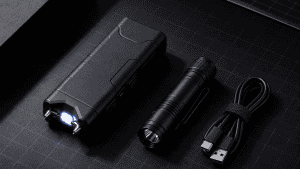
A high-output flashlight or stun baton adds a close-range option if a threat reaches you before you can create distance. These tools are compact enough for pack carry and serve dual purposes — navigation at night and deterrence at close range. For women in particular who hike or camp solo, our resource on flashlight stun batons breaks down what to look for in a trail-ready option.
Trip notification protocols round out the plan. Before any remote excursion, file a float plan with a trusted contact — your exact route, expected return time, and the protocol for when to call for help if they don’t hear from you. This is free, requires no gear, and is one of the most consistently effective safety measures for remote travelers.
Older adults and solo travelers face a compounded version of the remote-area challenge: they may have less capacity to physically respond to a threat and fewer people to cross-check their safety. The planning architecture stays the same — alarm, deterrent, communication, trip notification — but the weight given to each layer shifts.
For older adults in particular, ease of activation matters significantly. A personal alarm that requires a strong grip or a difficult-to-locate pin may not deploy reliably under stress or physical limitation. Look for pull-pin designs with a secure clip that keeps the pin accessible without requiring fine motor precision. Our category page on personal alarms for elderly users addresses these ergonomic considerations directly.
Solo travelers of any age — whether they’re doing domestic backcountry hiking or international travel near remote areas — benefit from treating the communication layer as equal in priority to the deterrent layer, not secondary to it. The personal alarm handles the immediate moment. The satellite communicator or emergency contact protocol handles the aftermath. Both have to work.
No — and that’s not a criticism of the tool. A personal alarm is not designed to be a complete safety system. It’s one high-reliability, low-complexity component of a layered plan. In the same way that a seatbelt is not enough on its own to make driving safe — you also need functional brakes, mirrors, and driving skill — a personal alarm is one layer among several that together constitute a real safety posture.
In urban and suburban environments, a personal alarm often functions as a near-complete solution because the response infrastructure exists around it. In remote environments, you are responsible for supplying more of that infrastructure yourself. That means active deterrents, communication tools, and pre-trip planning all become load-bearing parts of your safety plan rather than optional add-ons.
The good news is that none of this is complicated. A personal alarm, a canister of quality pepper spray, a satellite communicator, and a filed trip plan fit in a daypack without adding significant weight. The plan is straightforward. The commitment to carrying it consistently is what separates prepared backcountry travelers from those who assume everything will be fine.
In open outdoor environments without wind interference, a 130dB personal alarm is audible at distances of approximately 300–600 feet under favorable conditions. Dense tree cover, wind, and terrain features like ridgelines or canyon walls can significantly reduce that range. In quiet backcountry settings with low ambient noise, the sound may carry farther than it would in an urban environment with competing noise sources.
Personal alarms can startle some wildlife and may cause a momentary retreat, but they are not a reliable primary defense against bear encounters. Bears habituated to human presence — common in high-traffic national parks — may not be deterred by sudden noise. Bear spray with a minimum 7.9 oz canister and 1–2% capsaicin concentration is the recommended wildlife deterrent for bear country. A personal alarm can supplement that kit, not replace it.
Pull-pin designs are preferred for trail and outdoor use because they activate reliably even with gloves on, during physical exertion, or under stress. The pin-separated design also means the alarm continues sounding without requiring the user to hold a button — useful if hands are occupied or compromised. Clip the device to a pack strap or belt loop where it is visible and accessible without searching.
Yes. Pepper spray and a personal alarm serve different functions. The alarm creates audible distress and startles threats. Pepper spray provides a direct, active deterrent effective at 10–18 feet against both human attackers and some wildlife. Carrying both costs little in weight or bulk and ensures you have a response option whether a threat is deterred by sound or requires active countermeasures to stop.
Satellite-based personal locator beacons (PLBs) and two-way satellite communicators are the most reliable options when cellular infrastructure is absent. PLBs send a one-way SOS signal to rescue coordination centers via satellite — no subscription required, but no two-way messaging. Two-way satellite communicators allow check-in messages and two-way communication with a subscription plan. For frequent backcountry use, a two-way device is the stronger investment.
Yes — and this is one of the most underappreciated uses of a personal alarm in remote settings. A sustained 130dB signal is significantly more audible and distinctive than voice, and it does not fatigue the way shouting does. If you are injured and waiting for rescue, activating the alarm periodically to guide search and rescue teams toward your position is an effective and practical use of the device entirely separate from its deterrence function.
Most personal alarms using standard alkaline batteries maintain rated output for 20–40 minutes of continuous activation, with shelf life of 12–36 months depending on battery chemistry and storage conditions. Before any remote trip, test your alarm briefly to confirm it activates and sounds at full volume. Replace batteries annually at minimum, or before any extended trip where you cannot easily source replacements. Store the device away from extreme heat, which degrades battery capacity faster.
Accessibility is everything. A personal alarm buried in the main compartment of a pack fails when you need it most. Clip it to a pack shoulder strap, a belt loop, or a hydration vest sternum strap — somewhere reachable with either hand without removing the pack. Practice the activation motion at home before the trip so that it becomes automatic under stress. The best alarm is the one you can deploy in under two seconds.
In remote environments, trust is built through preparation — not through hoping conditions will be favorable. A personal alarm is a genuinely valuable tool, and its limitations in low-population areas don’t reduce that value; they define where it fits in a larger plan. Build that plan before you need it. Carry the right combination of tools. File your trip details with someone who will act on them. And if you want to explore the full range of options for your specific situation — whether you hike solo, travel frequently, or spend time in areas with both human and wildlife concerns — browse the personal alarm and deterrent categories at Nittany Self Defense. Everything carried here is chosen because it works in the real conditions you actually face.






We use cookies to improve your experience on our site. By using our site, you consent to cookies.
Manage your cookie preferences below:
Essential cookies enable basic functions and are necessary for the proper function of the website.
These cookies are needed for adding comments on this website.
Statistics cookies collect information anonymously. This information helps us understand how visitors use our website.
Google Analytics is a powerful tool that tracks and analyzes website traffic for informed marketing decisions.
Service URL: business.safety.google (opens in a new window)