
U.S. Legal in Most States • Discreet Shipping • Real-World Protection • No Permits Required in Most Areas
U.S. Legal in Most States • Discreet Shipping • Real-World Protection • No Permits Required in Most Areas
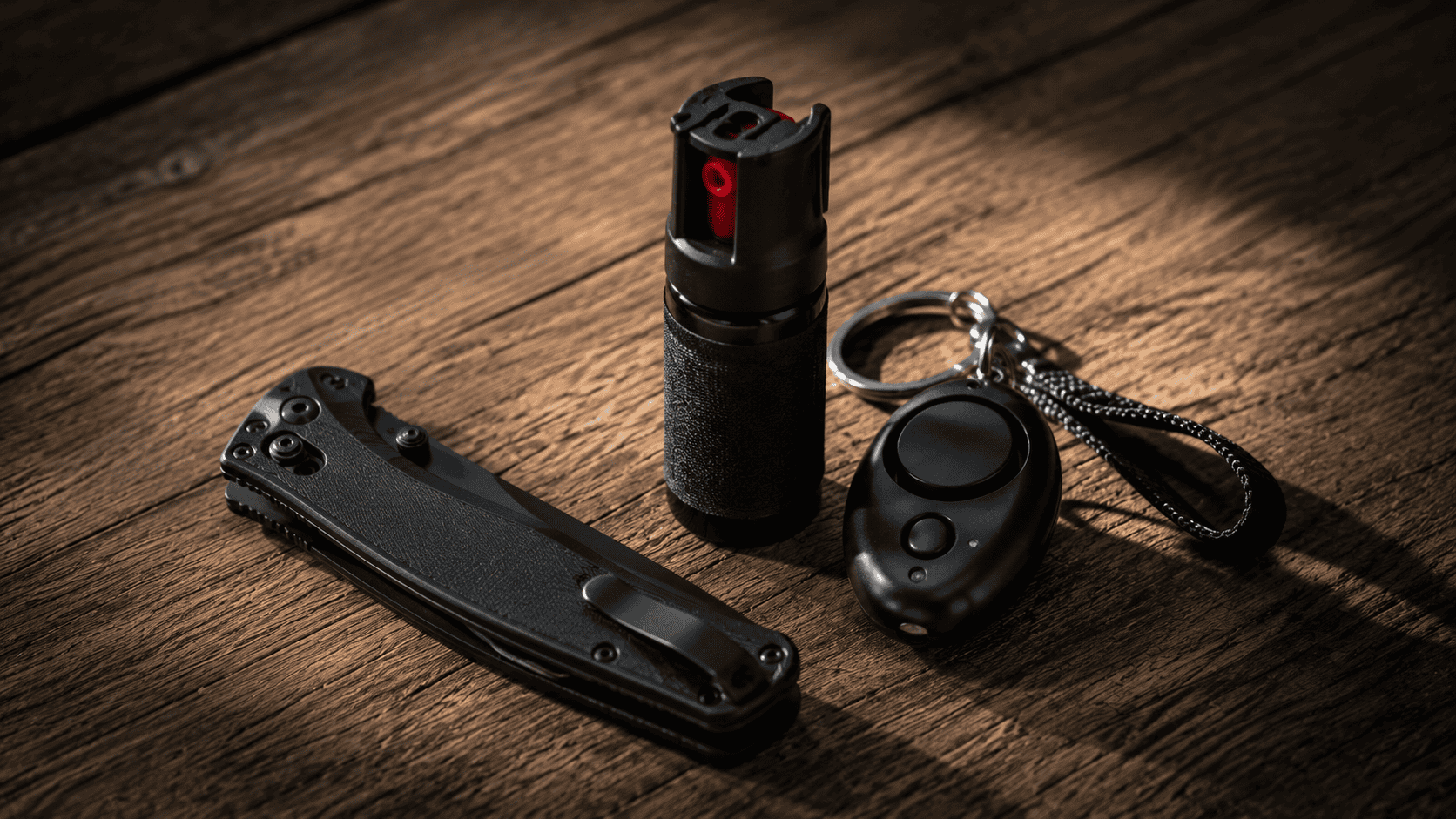
So what are the pros and cons of carrying a knife for self defense? Carrying a knife for self-defense has real advantages — it’s accessible, affordable, and can be a meaningful deterrent — but it also comes with serious legal risks, training demands, and situational limitations that can make it the wrong choice for many people. Before you clip a blade to your pocket and call it a day, you need to understand exactly what you’re taking on, because the consequences of getting it wrong can be severe. This post walks you through the honest pros and the hard cons so you can make a genuinely informed decision.
A knife offers several practical benefits that explain why so many people consider it as a personal protection option. The most obvious advantage is accessibility — a folding knife is small, lightweight, and can be carried in a pocket, on a belt, or clipped to a waistband without drawing attention. Unlike a firearm, a knife requires no ammunition, no special storage, and minimal maintenance. In a genuine emergency where you need a tool that deploys in seconds, a well-designed folding knife can open with one hand in under two seconds with even modest practice.
There is also a deterrence factor that shouldn’t be underestimated. Many self-defense situations de-escalate the moment a potential attacker realizes their intended victim is not an easy target. The visible presence of a blade — or even the sound of one deploying — can cause a threat to reconsider. This alone doesn’t make a knife a reliable primary defense, but it’s a real-world dynamic worth acknowledging.
From a cost and versatility standpoint, a quality fixed-blade or folding knife is one of the most multi-purpose tools you can carry. It’s an everyday utility tool — opening packages, cutting rope, handling camping tasks — that doubles as a last-resort defensive option. That dual utility makes it easier for people to justify carrying consistently, and consistent carry is one of the most important factors in any self-defense plan.
Here is where the honest conversation gets uncomfortable, and this is the section that could genuinely prevent you from making a costly mistake. The risks of carrying a knife for self-defense are substantial, and they deserve the same weight as the advantages.
Close-contact danger is the number one tactical problem. A knife is only effective in very close range — typically within arm’s reach. That means you must allow a threat to get within grabbing distance before your tool becomes useful. In a real-world attack, that proximity is exactly where you are most vulnerable to being overpowered, disarmed, or injured. Unlike a firearm or pepper spray, a knife does not give you any distance advantage whatsoever.
Training is not optional — it’s critical. Using a knife effectively in a high-stress defensive situation requires specific skills that most people do not have. Without training, you are just as likely to lose the knife to your attacker, cut yourself in the chaos, or fail to stop the threat. Carrying a knife with no defensive training is genuinely dangerous, not just to an attacker but to yourself. If you carry a knife for protection, commit to hands-on training with a qualified instructor.
The legal consequences can be life-altering. Even in a completely justified use of force scenario, deploying a knife in self-defense can result in serious criminal scrutiny. Prosecutors and juries often view knife wounds differently than other forms of self-defense, and the optics of a stabbing — even a justified one — can be extremely difficult to defend in court. You must be prepared for the possibility that using your knife correctly could still result in arrest, legal fees, and civil liability.
Knife carry laws vary dramatically from state to state and even city to city — and ignorance of the law is never a defense. This is not a minor detail; it’s the first thing you need to research before putting a blade in your pocket. Some states allow open carry of fixed-blade knives of any length. Others ban folding knives over a certain blade length entirely. Many municipalities layer additional restrictions on top of state law, meaning a knife that’s legal in one county could get you charged in the next one over.
Here are the specific legal factors you need to research for your location:
Do not rely on forum posts or secondhand information for this research. Check your state’s official statutes directly, and if you’re unsure, consult a local attorney who specializes in weapons law. Getting this wrong can mean criminal charges before you’ve ever been in a threatening situation.
A knife is one tool in a much broader toolkit, and for most everyday people, it’s not the first tool that should be reached for. When you stack it up against other widely available self-defense options, a clear picture emerges about where knives fit — and where they don’t.
Pepper spray is one of the most effective non-lethal options available for everyday personal protection. It works at a distance of 8 to 15 feet, doesn’t require physical contact, is legal in most states with minimal restrictions, and can incapacitate an attacker quickly. For someone without extensive self-defense training, pepper spray is arguably more practical and safer than a knife in most realistic scenarios.
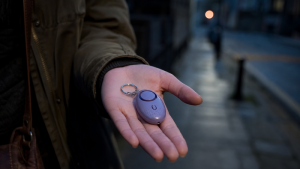
Personal alarms are overlooked but genuinely effective at drawing attention, deterring attackers, and buying time to escape. They carry zero legal risk and require no training whatsoever.
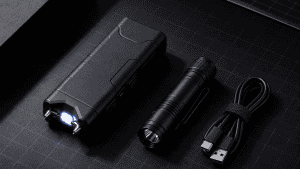
Tactical flashlights can temporarily blind an attacker, are legal everywhere, and double as impact tools. They’re a smart complement to any carry setup.
Stun guns and TASERs offer close-range incapacitation without lethal force implications, though they carry their own legal restrictions depending on your state.
A knife can work as a last-resort backup within a layered self-defense approach, but it should rarely be your first or only line of protection. The most effective personal safety plans combine awareness, avoidance, non-lethal deterrents, and — only if necessary — a physical defensive tool.
If you’ve done your legal homework, committed to proper training, and decided a knife makes sense as part of your personal protection plan, the type of knife you choose matters significantly. Not every knife in your kitchen drawer or camping kit translates to an effective defensive tool.
Here’s what to look for in a purpose-designed defensive folding knife:
Fixed-blade knives offer greater strength and faster deployment since there is no folding mechanism to operate, but they are significantly more restricted by law in many states and harder to carry discreetly. For most everyday carry situations, a quality folding knife represents the better balance of practicality and legal compliance.
Honestly, no — not without proper training. A knife is a close-range tool that requires specific skills to use effectively and safely under stress. Without training, the risk of losing the knife to your attacker, injuring yourself, or failing to stop the threat is very real. Beginners are generally better served by starting with pepper spray or a personal alarm while they develop their knowledge base and skills over time.
Knife carry laws vary significantly by state, county, and city. Most states allow folding knives under a specific blade length, but restrictions on fixed blades, automatic knives, and carry methods differ widely. Some locations ban carrying any knife with intent to use it as a weapon. You must research your specific state and local laws before carrying — do not rely on assumptions or secondhand information from online forums.
Even in a fully justified self-defense scenario, using a knife can trigger serious legal consequences, including arrest, criminal charges, and civil lawsuits. Knife wounds are often viewed more negatively by prosecutors and juries than other forms of self-defense. You should consult a self-defense attorney in your state before carrying a knife defensively, and consider whether your situation truly justifies a potentially lethal tool.
Consistent carry position is everything. Most defensive folders are designed to clip to the front pocket of your dominant hand side so the knife is always in the same location. Practice drawing and opening the knife repeatedly — with an unsharpened trainer if possible — until the motion is smooth and automatic. In a real emergency, you will not have time to think about where your knife is or how to open it.
A layered approach is strongly recommended. Pepper spray gives you an effective, non-lethal, distance option that works before a threat closes in. A knife serves as a last-resort close-contact backup. Carrying both — and knowing when to use each — is a smarter strategy than relying on any single tool. Just make sure both are legal in your jurisdiction and that you’re trained on each.
There is no universal answer — it depends entirely on your state and local laws. Common legal limits in many jurisdictions fall between 2.5 and 4 inches of blade length, but some cities impose stricter limits, and some states have no statewide limit at all. Always verify the specific laws in your area before purchasing or carrying. When in doubt, a 3-inch blade is a generally conservative choice that falls within legal limits in most places.
A knife becomes significantly less effective — and considerably more dangerous for you — in situations involving multiple attackers. You lose any tactical advantage of distance, you’re at high risk of being overpowered, and deploying a blade can escalate the danger dramatically. If you’re facing multiple threats, your first and best options are escape, evasion, and creating noise and attention with a personal alarm. A knife should be considered a true last resort in any multi-attacker scenario.
The honest answer is: it depends — and that dependency rests on your legal environment, your commitment to training, and your overall personal safety strategy. A knife is not a magic equalizer, and it’s not a beginner’s tool. Carried responsibly, by someone who has done the legal homework and invested in real training, a defensive knife can be a meaningful part of a layered self-protection plan. Carried carelessly, it can create more danger than it prevents.
If you’re just starting to think about personal protection, I’d encourage you to start with tools that have a lower barrier to effective use — pepper spray, a personal alarm, and a solid awareness practice. If you’ve been in the personal safety space for a while and you’re ready to explore whether a knife fits your carry setup, go in with eyes open: know your laws, find qualified training, and treat the decision with the seriousness it deserves.
At Nittany Self Defense, we’re here to help you think through your options and find the tools that genuinely fit your life and your level of preparedness. Feeling safer should come from knowledge and confidence — not just from what’s in your pocket.
Until later…..







We use cookies to improve your experience on our site. By using our site, you consent to cookies.
Manage your cookie preferences below:
Essential cookies enable basic functions and are necessary for the proper function of the website.
These cookies are needed for adding comments on this website.
Statistics cookies collect information anonymously. This information helps us understand how visitors use our website.
Google Analytics is a powerful tool that tracks and analyzes website traffic for informed marketing decisions.
Service URL: business.safety.google (opens in a new window)