

U.S. Legal in Most States • Discreet Shipping • Real-World Protection • No Permits Required in Most Areas
U.S. Legal in Most States • Discreet Shipping • Real-World Protection • No Permits Required in Most Areas
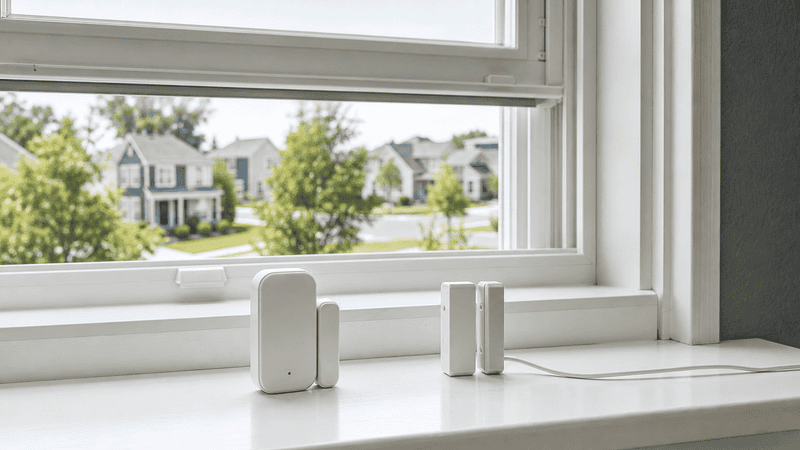
For most window alarm installations, wireless sensors are the practical choice — they install in under two minutes, require no drilling or wire routing, and can be relocated without leaving damage. Wired setups deliver more reliable continuous monitoring and are harder to defeat with a simple battery removal, making them the right call for permanent installs in owned homes with higher security requirements. The correct answer depends entirely on your structure, your lease status, and what threat you’re actually solving for.
Here’s the counterintuitive reality that most buyers miss entirely: the wireless vs. wired debate isn’t really about technology. It’s about installation permanence and tamper resistance. The moment you reframe the question that way, the right answer becomes obvious — and it’s rarely what the product listings suggest. Whether you’re securing a ground-floor apartment window or hardening a detached home, the variables that matter most have nothing to do with signal frequency or decibel output. Let’s work through each one.
Wired window alarms use a physical circuit — a continuous electrical loop that triggers an alarm when the circuit is broken. The sensor contacts are hardwired to either a central control panel or an independent sounding unit. Circuit integrity is constant and does not depend on battery state or radio frequency communication. The tradeoff is installation complexity: wire must be routed along frames, through walls, or under trim, which requires tools, time, and typically some surface damage.
Wireless window alarms use a two-component magnetic contact system — a sensor unit and a magnet that ride adjacent frame surfaces. When the window opens, the magnetic field breaks and the sensor triggers either an onboard alarm or transmits an RF signal to a hub. Most self-contained wireless units operate in the 85dB to 130dB range. RF-connected units can transmit to base stations at ranges from 100 to 500 feet depending on construction materials between the sensor and receiver.
The performance gap between these two approaches is narrower than most people assume. A 120dB standalone wireless alarm sitting six inches from a sleeping intruder is acoustically indistinguishable from a wired equivalent. The meaningful technical divergence shows up in three areas: battery dependency, RF interference susceptibility, and tamper resistance — all of which are addressable if you know what to look for before you buy.
Rental properties and apartments essentially make the decision for you. Landlords prohibit permanent modifications in the vast majority of lease agreements, which rules out any wired installation that requires drilling mounting hardware into frames or routing cable through walls. Wireless magnetic contact sensors mount with adhesive backing and remove cleanly — they’re the only viable option in this context. If you’re in a rental situation, door and window alarms for renters and apartments are specifically designed around this constraint.
Owned homes with existing security infrastructure present a different calculation. If you have a central monitored alarm panel with hardwired door loops, extending that system with wired window contacts is the highest-reliability option. The sensors integrate directly into a zone your monitoring company already watches, and there’s no battery to fail during a multi-day power outage. The installation cost and wall disruption are sunk costs in a permanent residence where you control the structure.
Temporary or situational deployments — vacation rentals, travel, college dorms, a basement bedroom being used short-term — favor wireless decisively. A self-contained 120dB magnetic contact alarm can be in place in 90 seconds and packed into a bag when you leave. That operational flexibility has no wired equivalent.
This is where the innovation framing matters most, because the standard consumer narrative frames wired as “professional” and wireless as “basic.” That framing is outdated. The actual tamper resistance calculus is more nuanced. A wired system that has been properly installed with tamper-protected enclosures and battery backup is harder to defeat than a standalone wireless sensor — a sophisticated intruder can locate a wireless sensor, find its battery compartment, and disable it before triggering the alarm. That’s a real vulnerability.
However, most window alarm scenarios are not countering sophisticated intruders. Residential burglary is predominantly opportunistic — deterrence is the actual threat model, not defeat-resistance. A window alarm that sounds at 120dB the instant a window slides open deters the overwhelming majority of break-in attempts regardless of whether the signal is traveling over copper wire or 433MHz RF. The intruder doesn’t stay to analyze the technology. They leave.
For households with specific monitoring needs — window alarms for dementia patients who may attempt to exit, or alarms for children and toddlers in upstairs bedrooms — the tamper question shifts entirely. The “intruder” is an unaware family member, and the alarm’s job is notification, not deterrence. In these use cases, wireless magnetic sensors are faster to install, easier to relocate as needs change, and functionally identical to wired alternatives.
Wired systems, once installed, require minimal ongoing attention. There are no batteries to replace at individual sensors. A properly installed hardwired loop can operate for years without intervention beyond periodic testing. The maintenance burden concentrates at installation — after that, the system is largely passive.
Wireless sensors run on batteries — typically CR2032 coin cells or AA/AAA configurations depending on unit size. Battery life varies from 6 months on high-sensitivity units with frequent trigger events to 2–3 years on low-drain sensors in low-traffic windows. The discipline required is periodic battery checks, ideally on a schedule tied to daylight saving time changes. Neglect this and your sensor becomes silent at the worst possible moment.
RF-connected wireless systems add a layer: the base station or hub requires its own power source and may itself need battery backup in the event of a power outage. In complex wireless mesh systems, you’re managing multiple battery-dependent nodes simultaneously. That’s not a dealbreaker — it’s simply a maintenance protocol that needs to be built into your security routine rather than ignored.
Scale is one of the most overlooked variables in this decision. For one to three windows — a ground-floor bedroom, a basement window, a sliding glass door — standalone wireless sensors are cost-effective and fast. Each unit is independent, priced typically in the $8–$20 range, and requires zero infrastructure. Three windows protected in under ten minutes.
For six or more windows, the calculation shifts. At scale, managing multiple independent battery-powered sensors with no central monitoring or status visibility becomes operationally burdensome. At this point, either a wired central panel system or a wireless hub-based system with sensor status monitoring starts making more engineering sense. Hub-based wireless systems give you the installation flexibility of wireless with the centralized visibility of a wired panel — a genuine hybrid that the wired-vs-wireless binary completely obscures.
Whole-home protection at scale also raises the question of layering your security strategy. Window and door alarms are perimeter detection — they tell you a breach is in progress. Pairing that perimeter layer with interior deterrents like diversion safes for home ensures that even if a sensor is missed or defeated, your most important assets aren’t immediately accessible.
Alarm output rated at minimum 100dB. Below that threshold, the sound is insufficient to reliably wake a sleeping occupant one room away or to cause enough discomfort to drive off an intruder. Purpose-built window alarms in the 120dB–130dB range are the standard for residential security use. Verify the dB rating is measured at one meter — some manufacturers measure at three feet, which inflates the apparent rating.
For wireless units, verify the magnet gap tolerance. This is the maximum separation distance between the sensor and magnet before the alarm triggers. Most quality units trigger at 3/8 inch to 1/2 inch of gap — tight enough to detect a window cracking open, not so sensitive that normal frame flex causes false positives. Units with adjustable sensitivity give you calibration control across different window types.
For wired units going into a central panel, verify zone compatibility and EOL (end-of-line) resistor requirements before purchasing sensors separately from your panel brand. Mismatched resistance values cause nuisance faults that most homeowners can’t diagnose without a technician.
Finally, consider whether your use case extends beyond intrusion detection. If you’re protecting a household member who sleepwalks, you need audible alert at the exit point, not necessarily a central panel notification. The technical requirements of safety monitoring and intrusion deterrence overlap but are not identical — and the right hardware choice changes accordingly.
RF-connected wireless alarms that transmit to a hub can theoretically be disrupted by broadband signal jammers — a sophisticated and expensive attack vector that is not characteristic of opportunistic residential burglary. Standalone self-contained wireless alarms that trigger an onboard siren have no RF transmission to jam. They respond to physical magnet separation only, making them immune to signal-based defeat.
A minimum of 100dB is required to reliably wake a sleeping adult through a closed interior door at 30 feet. For larger homes or situations where the alarm may be two rooms away, 120dB–130dB is the practical standard. Sound intensity drops by approximately 6dB for every doubling of distance, so a 120dB alarm measured at one meter drops to roughly 108dB at two meters. Verify dB ratings and measurement distance before purchasing.
Wired alarms connected to a central panel depend on whether that panel has battery backup — most monitored systems include a 4–24 hour backup battery. Hardwired standalone alarms with no panel connection typically have their own onboard battery backup. Wireless standalone sensors are entirely battery-operated and are unaffected by power outages. This is one area where wireless sensors have an inherent reliability advantage in outage scenarios.
Many modern central alarm panels support both hardwired zones and wireless RF zones simultaneously. This hybrid configuration lets you wire sensors in permanent locations like main-level windows while using wireless sensors in harder-to-reach areas or supplemental locations. Verify your panel’s wireless receiver compatibility and supported RF frequency before purchasing add-on wireless sensors — not all panels support third-party wireless zones.
Standard two-piece magnetic contact sensors mount to any window configuration — double-hung, casement, sliding, or awning — as long as one component is on the fixed frame and the other is on the moving sash. For double-hung windows that can open from both top and bottom, you would need separate sensors on each sash to catch openings from either direction. Most installations only cover bottom-sash opening, which is the higher-frequency entry point.
Battery life varies significantly by sensor design and trigger frequency. Low-drain magnetic contact sensors in low-traffic windows typically last 18–36 months on a single set of batteries. High-sensitivity sensors or those in frequently opened windows drain faster — closer to 6–12 months. Sensors with a low-battery indicator LED or audible chirp give you advance warning. Plan to test and replace batteries on a 12-month inspection schedule regardless of indicator status.
A 120dB standalone wireless alarm on a first-floor bedroom window provides effective perimeter detection. Ground-floor windows are the highest-frequency entry points in residential burglary — approximately 23% of break-ins use a first-floor window as the entry point. Any functioning alarm at that location is a deterrent upgrade over no protection. If you want higher tamper resistance on your most vulnerable windows, hardwired sensors on a monitored panel provide the most robust solution, but the wireless option is far from inadequate.
Most residential window alarm sensors are rated for indoor use only — they are not weatherproof and should not be exposed to rain or direct humidity. For screened windows, the sensor mounts on the interior window frame and glass sash, not on the screen frame. The screen does not interfere with sensor function. If you need perimeter detection at an exterior point, outdoor-rated motion sensors or door/gate sensors with weatherproof housings are the appropriate hardware category.
The wireless vs. wired framing is ultimately a false binary — both technologies solve the same problem through different implementation paths, and the right choice emerges cleanly once you define your installation constraints, your scale, and your actual threat model. Renters get wireless. Permanent installs with existing panel infrastructure get wired. Hybrid environments get both. What you don’t do is make the choice based on which category sounds more “professional.” That’s a marketing frame, not an engineering one.
If you’re evaluating your home’s perimeter security layer and aren’t sure where to start, browse the window and door alarm options at Nittany Self Defense — and consider how that perimeter detection layer pairs with the rest of your home security setup. A window alarm tells you a breach is happening. What you have in place after that determines the outcome.







We use cookies to improve your experience on our site. By using our site, you consent to cookies.
Manage your cookie preferences below:
Essential cookies enable basic functions and are necessary for the proper function of the website.
These cookies are needed for adding comments on this website.
Statistics cookies collect information anonymously. This information helps us understand how visitors use our website.
Google Analytics is a powerful tool that tracks and analyzes website traffic for informed marketing decisions.
Service URL: business.safety.google (opens in a new window)