
U.S. Legal in Most States • Discreet Shipping • Real-World Protection • No Permits Required in Most Areas
U.S. Legal in Most States • Discreet Shipping • Real-World Protection • No Permits Required in Most Areas

Quick Answer: The best self defense keychains for women combine accessibility, simplicity, and reliability – tools you can actually reach and use under stress in seconds. The top options include personal alarms, kubotan-style keychains, pepper spray keychain attachments, and cat ear keychains, each with specific strengths depending on your comfort level and lifestyle. The right choice is the one you’ll actually carry, practice with, and know how to use before you ever need it.
The honest answer is this: most self defense tools fail not because they don’t work, but because they weren’t ready when they were needed. A pepper spray buried at the bottom of a bag, a kubaton clipped to a zipper but never practiced with, a keychain alarm that takes three steps to activate – all of these become useless the moment stress and adrenaline hit. The tool that saves you is the one on your keys, in your hand, and second nature to operate.
Here’s what tends to go wrong:
Understanding these failure points is step one. The rest of this guide is built around avoiding every single one of them.
There are four keychain-based self defense tools worth your serious attention. Each works differently and suits different people, situations, and threat levels. Here’s a clear-eyed breakdown:
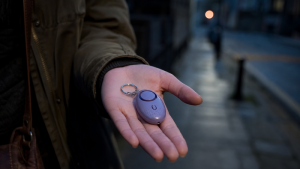
Personal alarms are the most universally accessible self defense keychain option – no training required, no legal concerns in virtually any state, and no hesitation about using them. A quality keychain alarm emits 120-130 decibels of piercing sound when activated, which accomplishes two critical things: it startles and disorients an attacker, and it draws immediate attention from bystanders. Look for models that activate with a single pull or push – not a sequence of steps.
Warning: Avoid alarms with complicated activation mechanisms. Under stress, anything more than one motion becomes a liability.
A kubotan is a small, rigid cylindrical rod – typically 5-6 inches long – that extends from your fist to amplify the power of a strike or apply pressure to sensitive nerve points. It’s legal in most states, subtle enough to carry anywhere, and effective when you know how to use it. The critical warning here is this: a kubotan without practice is almost useless. If you choose this option, you must commit to basic practice sessions so the motion becomes muscle memory.
Checklist for kubotan readiness:
Cat ear keychains – sometimes called wildcat keychains – are hard plastic or metal knuckle-style tools shaped with two pointed ear tips. You slip your fingers through the ring, and the ears protrude between your knuckles, turning a closed fist into a significantly more impactful strike. These are popular because they look unassuming and fit naturally on a keychain. Important legal note: Some states and municipalities classify these as brass knuckle equivalents, which makes them illegal to carry in those areas. Always check your local laws before purchasing.
Mini pepper spray units designed to clip directly onto a keychain are one of the most effective close-range deterrents available. A quality OC (oleoresin capsicum) spray causes immediate involuntary eye closure, intense burning, and respiratory discomfort – giving you critical seconds to escape. The keychain format keeps it accessible and reduces the chance it gets buried in a bag. Look for a model with a safety cap that’s easy to flip off with one thumb but won’t accidentally discharge.
Pepper spray keychain warning checklist:
The right keychain isn’t the most powerful one – it’s the one that fits your daily reality without friction. Ask yourself these questions before buying:
Not all keychain self defense products are built to the same standard, and a cheap tool can fail at the worst possible moment. Here’s your buying checklist:
Training doesn’t mean signing up for martial arts classes – though that’s always a great idea. It means building a specific, repeatable physical habit so the motion is automatic when your hands are shaking and your heart rate is through the roof. Here’s a simple five-step practice routine you can do at home in five minutes:
Watch this helpful demo video about self defense keychains
Most keychain self defense tools are legal in most U.S. states, but there are important exceptions you cannot afford to ignore. Pepper spray is legal in all 50 states but may be restricted by concentration, canister size, or age of purchase in states like California, New York, and Massachusetts. Cat ear keychains may be classified as illegal weapons in some jurisdictions. Kubotans occupy a legal gray area in a small number of states. Personal alarms are universally legal everywhere in the U.S.
Before you carry any self defense tool, do these three things:
A personal alarm keychain is the best starting point for anyone new to self defense tools. It requires zero training, has no legal restrictions, and works by drawing attention and disorienting an attacker – two outcomes that don’t depend on your physical strength or technique. Once you’re comfortable with the concept of carrying a self defense tool daily, you can add something like a pepper spray attachment alongside it.
No self defense tool guarantees a specific outcome, and anyone who tells you otherwise isn’t being straight with you. What these tools do is improve your chances of escaping or deterring a threat by creating distance, pain, noise, or surprise. The goal is never to win a fight – it’s to create a few seconds of opportunity to get away safely. Realistic expectations lead to better preparation and smarter choices.
Keep your keys in your hand – not your bag – anytime you’re in a situation that raises your awareness, like walking to your car at night or moving through an unfamiliar area. Practice the retrieval motion regularly. Consider attaching your self defense tool to a wristlet or carabiner that lets you carry keys in your palm without gripping them constantly. Accessibility is everything.
Mini keychain pepper sprays typically hold less formula and have a shorter spray range than full-size units, usually 6-8 feet versus 10-12 feet. However, they’re absolutely effective at close range, which is the most likely scenario for a personal safety threat. The trade-off in range is worth the trade-off in portability and daily carry compliance. A small canister you actually have is far better than a large one left at home.
In many states, yes – cat ear keychains can be classified alongside brass knuckles, making them illegal to carry as a weapon. The legal status varies significantly by location. Before purchasing one, research your state and local laws specifically. If you’re unsure, a personal alarm or pepper spray keychain provides strong protection without the legal risk. When in doubt, choose the tool that keeps you both safer and legally protected.
Pepper spray should be replaced at or before its labeled expiration date, typically every 2-4 years, and test-sprayed briefly every six months to check function. Personal alarm batteries should be checked every 3-6 months and replaced proactively. Physical tools like kubotans and cat ears should be inspected for cracks or damage every few months. Build a simple calendar reminder – checking your tools regularly is as important as owning them.
Carrying two complementary tools – like a personal alarm and a pepper spray keychain – is a smart layered approach. The alarm handles situations where you want to deter or attract attention without physical contact, while the pepper spray handles a closer, more immediate threat. Just make sure you’re not carrying so many tools that your keychain becomes unwieldy or hard to manage quickly. Two well-chosen tools beat five confusing ones.
The best self defense keychain for you is the one that fits your daily routine, respects your legal environment, and – most importantly – you’ve practiced with enough to use without thinking. Start with one tool. Learn it. Carry it consistently. Then build from there. Preparedness isn’t about paranoia; it’s about the quiet confidence that comes from knowing you’ve done something real to take care of yourself.
If you have questions about any of the tools we carry, reach out – I’m happy to help you figure out what makes the most sense for your situation. That’s what we’re here for.
Until later…..







We use cookies to improve your experience on our site. By using our site, you consent to cookies.
Manage your cookie preferences below:
Essential cookies enable basic functions and are necessary for the proper function of the website.
These cookies are needed for adding comments on this website.
Statistics cookies collect information anonymously. This information helps us understand how visitors use our website.
Google Analytics is a powerful tool that tracks and analyzes website traffic for informed marketing decisions.
Service URL: business.safety.google (opens in a new window)