
U.S. Legal in Most States • Discreet Shipping • Real-World Protection • No Permits Required in Most Areas
U.S. Legal in Most States • Discreet Shipping • Real-World Protection • No Permits Required in Most Areas
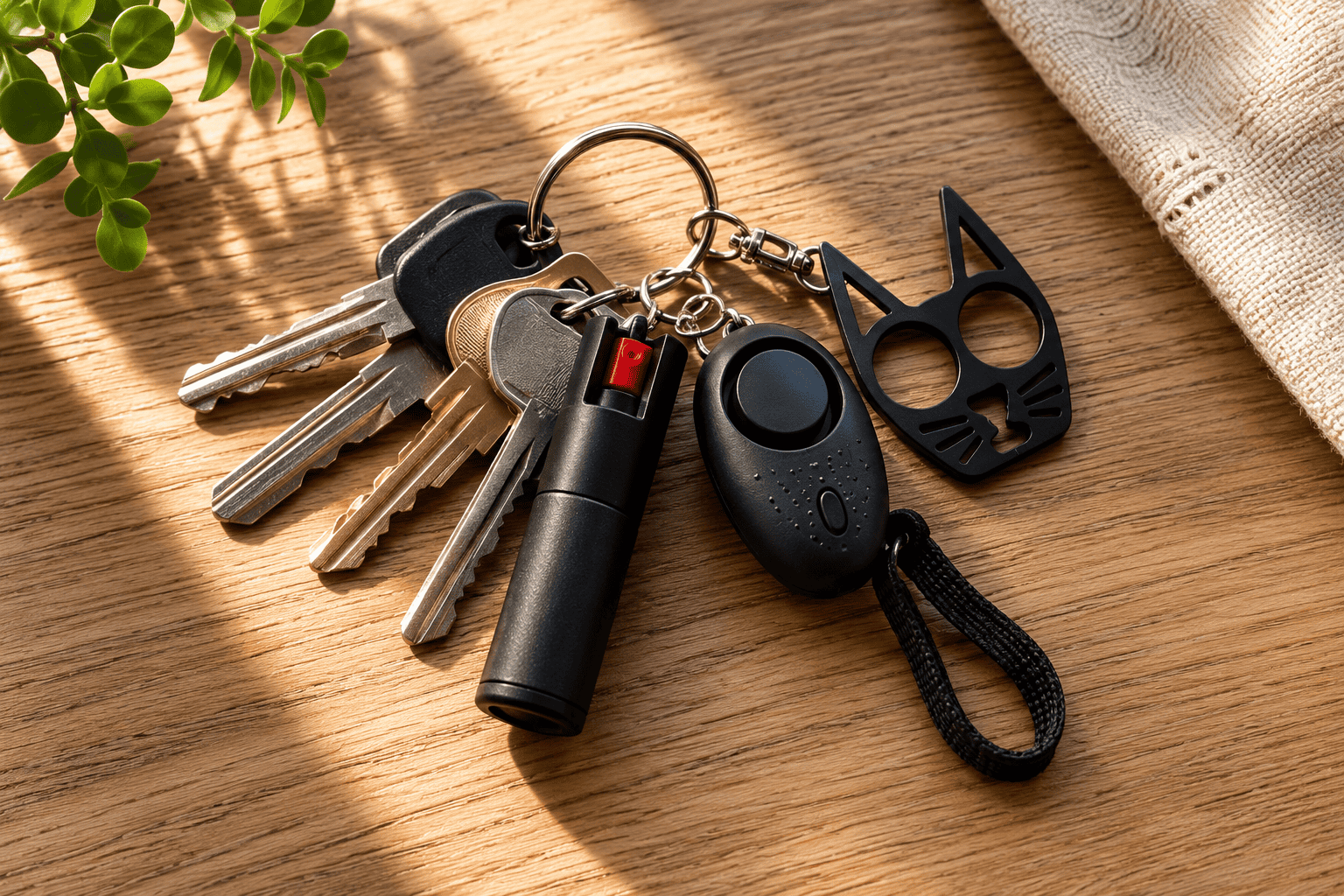
Quick Answer: A self defense keychain strike can be a meaningful advantage in a close-range threat situation – but only when you understand its real strengths and honest limitations. These compact tools are designed to concentrate the force of your strike, giving you more impact with less effort. They work best as part of a broader awareness and preparedness mindset, not as a guaranteed solution on their own.
A self defense keychain is a compact, hand-held tool. Carry it on your keys so it’s always with you. The most common styles include the kubotan-style stick, the cat-ear or pointed knuckle design, and the palm defender shape. Each one works on the same basic principle: when you make a fist around the tool, it extends beyond your knuckles or concentrates pressure into a smaller point, amplifying the impact of a natural striking motion.
Think of it this way – when you press your finger into someone’s arm, you feel the pressure. When you press a pen cap into the same spot, that pressure is much more intense, even though you’re using the same amount of force. That’s the physics behind these tools. They don’t require special strength. They work by focusing energy, which is why they appeal to so many people who aren’t looking for a complicated or high-maintenance option.
Most self defense keychains are made from hard ABS plastic, aluminum, or steel. They’re lightweight enough to carry every day without noticing them, and they stay on your keyring so they’re accessible without digging through a bag. That accessibility factor matters more than most people initially realize.
A keychain strike meaningfully increases the effectiveness of a bare-handed strike, particularly against sensitive targets, but it is not a dramatic force multiplier in the way some marketing language might suggest. The honest answer is that it makes your natural striking ability more efficient – not superhuman.
Where these tools genuinely shine is in targeting areas that are naturally vulnerable: the back of the hand, the collarbone, the shin, the temple, and pressure points along the forearm and neck. A strike with a pointed or rigid keychain to any of these areas creates significantly more discomfort than a bare-knuckle hit, and discomfort is often all you need to create an opportunity to escape.
Self defense is rarely about defeating an attacker. More often, the goal is to create a window of time and distance so you can get away. A keychain strike that causes a sharp, unexpected pain can interrupt an attacker’s focus just long enough for you to move. That’s a realistic and valuable outcome.
In most of the United States, self defense keychains are legal to own and carry, but laws vary by state and locality, so it’s worth looking up the rules where you live. Some states restrict specific designs – particularly the cat-ear style, which has a pointed profile – while kubotan-style sticks are more universally accepted. A few municipalities treat any purpose-designed striking tool differently than general keychain accessories.
The practical advice here is simple: do a quick search for your state’s laws, or ask locally. Most people will find they’re in the clear to carry these tools without any special permit. That said, knowing the legal landscape where you live is part of responsible ownership – and it’s worth a few minutes of your time.
You do not need formal martial arts training to use a self defense keychain at a basic level, but some practice will make a significant difference in how naturally you respond under stress. The goal is to make the tool feel like a natural extension of your hand so you’re not fumbling with it when it matters most.
Even without any formal instruction, you can build useful muscle memory by practicing a few things on your own:
Ten minutes of slow, deliberate practice a few times a week is genuinely useful. You don’t need to simulate a fight. You just need the grip and the movement to feel familiar. If you ever have access to a basic self defense workshop or women’s safety class, bringing your keychain and asking to incorporate it into the drills is a great idea.
Watch this helpful demo video about self defense keychains
Honest expectations matter here, and I’d rather give you the full picture than oversell what these tools can do. A self defense keychain is a close-range tool – it only works when a threat is already within arm’s reach. It offers no distance, no deterrent effect from across a room, and no protection against someone who doesn’t react to pain the way most people do.
Factors like an attacker’s size, level of intoxication, or emotional state can all affect how much a strike influences their behavior. That’s true of almost every self defense tool, not just keychains. The difference is that keychains are simple, always with you, and require no special storage, permits in most places, or activation time – which puts them in a category of their own for everyday carry.
They’re also not a substitute for awareness. Most self defense professionals will tell you that situational awareness – noticing your environment, trusting your instincts, and avoiding situations that feel off – is the most effective layer of personal safety anyone can develop. A keychain is a backup tool, not a front-line strategy.
Honestly, almost anyone can benefit from carrying one, but they’re particularly well-suited for people who want a low-profile, always-available option that doesn’t require a lot of maintenance or decision-making. That includes college students, commuters, people who walk to their car alone at night, and anyone who has simply decided they want to feel a little more prepared without carrying something bulky or complicated.
They’re also a good fit for people who aren’t ready to commit to pepper spray or a stun device, or who live somewhere those options aren’t practical. A keychain tool fits in any environment – office, campus, hiking trail – without drawing attention or raising questions.
It can create enough pain or shock to interrupt an attacker’s focus, which may be enough for you to create distance and escape. That’s the realistic and most practical goal. It’s unlikely to incapacitate a determined attacker on its own, but in many situations, a sharp, unexpected strike to a sensitive area can absolutely change the outcome of a confrontation by giving you a critical moment to move.
The most effective targets are naturally sensitive areas: the back of the hand, shin, collarbone, temple, bridge of the nose, and pressure points along the forearm and side of the neck. These spots respond to concentrated impact in ways that create immediate discomfort without requiring significant force. You don’t need to be strong to make a keychain strike effective in these locations.
They serve slightly different functions. The cat-ear style provides two forward-facing points that make contact during a punch, which works well for someone with a natural punching motion. The kubotan-style stick is better for downward or hammer strikes and pressure point application. Neither is universally better – the right choice depends on your grip preference and the type of movement that feels most natural to you.
No. The TSA prohibits self defense keychains – including kubotan sticks and cat-ear designs – in carry-on luggage. They may be packed in checked baggage. If you travel frequently, it’s worth having a dedicated travel plan for your everyday carry items. Always check the TSA website and the laws of your destination before traveling with any self defense tool.
Start with grip and draw practice – simply getting the tool into your hand quickly and consistently. Then practice slow, controlled strikes on a pillow or foam pad to build muscle memory for the motion. You don’t need to practice at full speed or force. Slow and deliberate repetition is what builds the kind of calm, automatic response you’d actually want under stress.
Most are extremely durable for daily carry. Hard ABS plastic and aluminum versions hold up well under normal conditions and won’t degrade in a pocket or bag over time. Steel versions are essentially indestructible for practical purposes. The main thing to watch for is a keyring connection that might loosen over time – check it occasionally to make sure the tool stays securely attached to your keys.
Yes, and that’s one of their genuine strengths. Because these tools focus force into a smaller surface area, they reduce the amount of strength required to create a meaningful impact. For people with arthritis, limited grip strength, or smaller hands, a well-fitted keychain tool can actually be more practical than trying to deliver an effective bare-handed strike under stressful conditions.
It’s best thought of as one layer in a broader approach to personal safety. Situational awareness is your first and most important tool. A keychain adds a close-range option that’s always with you. Depending on your lifestyle and comfort level, you might also consider pepper spray, a personal alarm, or other options. The most effective personal safety plan combines awareness, preparation, and the right tools for your daily life.
A self defense keychain is a simple, practical, and genuinely useful tool when you carry it consistently and understand what it’s designed to do. It amplifies the force of a natural strike, targets vulnerable areas effectively, and is accessible enough to be with you every day without any extra thought. That reliability – the fact that it’s always on your keys – is a bigger advantage than most people give it credit for.
It won’t solve every situation, and it shouldn’t be mistaken for a complete safety plan on its own. But for close-range situations where an extra edge makes a difference, it earns its place. If you’ve been thinking about adding one to your daily carry, my honest advice is this: pick one that fits your grip, practice getting it into your hand quickly, and let awareness be the first layer of your plan. The keychain is there as backup – and good backup is always worth having.
Until later…..







We use cookies to improve your experience on our site. By using our site, you consent to cookies.
Manage your cookie preferences below:
Essential cookies enable basic functions and are necessary for the proper function of the website.
These cookies are needed for adding comments on this website.
Statistics cookies collect information anonymously. This information helps us understand how visitors use our website.
Google Analytics is a powerful tool that tracks and analyzes website traffic for informed marketing decisions.
Service URL: business.safety.google (opens in a new window)