

U.S. Legal in Most States • Discreet Shipping • Real-World Protection • No Permits Required in Most Areas
U.S. Legal in Most States • Discreet Shipping • Real-World Protection • No Permits Required in Most Areas
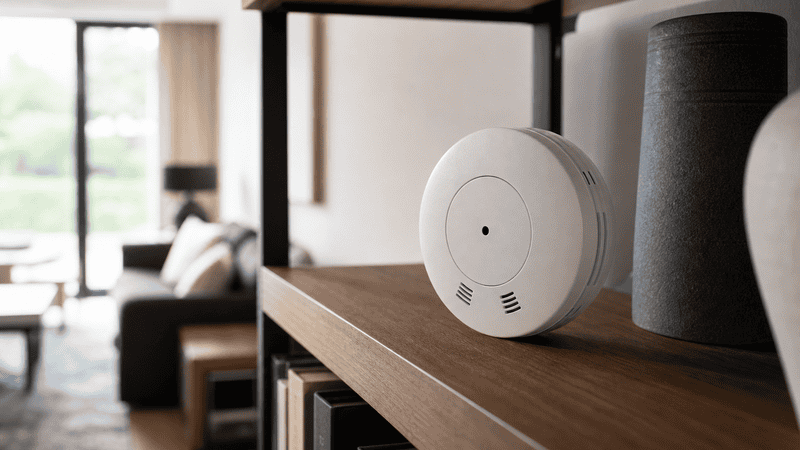
The most effective hidden cameras for home situational awareness combine reliable motion detection, continuous or loop recording, and adequate resolution — 1080p minimum — deployed at entry points, high-traffic interior zones, and valuables storage areas. Camera type, field of view, and power source determine operational reliability. Placement determines whether you have intelligence or gaps.
Situational awareness is not passive. It is a system — and your camera placement either gives you command of your environment or leaves you with blind spots that defeat the entire investment. Most homeowners install cameras reactively, after an incident, and position them based on convenience rather than coverage logic. That approach fails. The framework below treats your home as a tactical space and your cameras as active intelligence assets, not decorative deterrents.
Not every hidden camera that ships in a small box is worth deploying. Performance under real home conditions comes down to four variables: resolution, field of view, power reliability, and recording mode. Anything below 1080p full HD loses the detail needed to identify faces, read license plates, or confirm whether a door was properly secured. 4K options exist and are worth the premium for entry-point coverage where identification is the primary objective.
Field of view matters as much as resolution. A 90-degree lens captures a tight corridor. A 130-to-150-degree wide-angle lens covers an entire room from a single device. For interior rooms where you need full-scene coverage, prioritize wide-angle over zoom capability. For exterior-facing positions or long hallways, a narrower, higher-resolution lens delivers sharper detail at distance.
Power source is a non-negotiable operational decision. Battery-powered units offer flexibility in placement — you are not constrained by outlet proximity — but require maintenance schedules. Hardwired or plug-in units deliver continuous operation without battery failure risk. For critical positions, plug-in power is the professional standard. Battery units are appropriate for secondary placements where outlet access is impractical.
Recording mode determines what you actually capture. Motion-activated recording conserves storage and flags events automatically. Continuous loop recording provides an unbroken timeline, which is often decisive when reviewing footage for investigative purposes. The best deployments combine both: continuous recording at primary entry points, motion-activated at secondary positions. Before choosing your camera type, it is worth reviewing the full pros and cons of hidden cameras so your system design matches your actual operational needs.
Coverage is not about quantity of devices — it is about elimination of blind spots at decision points. A decision point is any location where an intruder must pass, pause, or choose a direction. Entry points are primary. Interior chokepoints are secondary. Valuables areas are tertiary. Deploy in that sequence and you build layered intelligence rather than random surveillance.
Front entry: The front door accounts for the majority of residential break-ins. A hidden camera here — positioned to capture the full door frame, porch, and approach path — is your highest-value placement. Disguised smoke detector units and clock-style cameras handle this position without alerting visitors to the surveillance layer. Aim for a height of 7 to 8 feet with a downward angle of 15 to 20 degrees to capture face detail.
Rear and side entries: Rear entries and side doors are preferred by experienced intruders precisely because they lack the social exposure of a front entry. These positions are frequently under-surveilled. A motion-activated unit with night vision capability is essential here — exterior rear areas typically lack ambient light after dark, and a camera without IR illumination provides no useful footage in low-light conditions.
Interior main corridor or stairwell: Any interior path that connects entry points to the rest of the home is a forced chokepoint. Anyone who enters must pass through it. A single wide-angle unit here — disguised as a thermostat, air purifier, or shelf object — gives you confirmation of movement through the home’s interior after any breach of an entry point.
Living room and common areas: Common areas are frequent targets for opportunistic theft of electronics and accessible valuables. A disguised unit — a picture frame, a book, a decorative clock — positioned at the room’s dominant corner delivers the widest field of view with the lowest detection profile.
Garage entry: The garage-to-home interior door is one of the most overlooked high-risk entry points in residential security. It is frequently unlocked from the interior side and provides covered, low-visibility access to the home. A camera covering both the garage interior and the connecting door gives you an early warning position that most home security systems ignore entirely.
Concealment is a function of context, not camouflage. A camera hidden inside a functional everyday object — a working clock, a smoke detector, a desk lamp — remains invisible indefinitely because it belongs in the environment. A camera stuffed behind a decorative item or taped to a rafter does not — it reads as out of place to anyone paying attention, which includes the people you most need to keep unaware of your surveillance layer.
Match the disguise to the room’s existing inventory. A smoke detector camera in a room that already has smoke detectors is invisible. The same unit in a room with no other detectors stands out. A clock camera on a nightstand in a bedroom reads as completely natural. In a kitchen where no clock exists, it creates a question. The rule is simple: deploy the disguise that the room already contextually justifies.
Lens positioning within the disguise object must align with your intended field of view before final placement. Test every unit before committing to a position. Walk through the intended coverage zone and confirm the frame captures what you need — door, approach path, or room interior — with the camera in its deployed position. Adjust angle during installation, not after. Repositioning a camera post-deployment disturbs the environment and can reveal the unit to anyone already familiar with the space.
A hidden camera captures intelligence. A dummy camera projects deterrence. These are fundamentally different operational objectives, and conflating them produces a security system that accomplishes neither effectively.
Dummy cameras — visible, realistic-looking units designed to be seen — function on deterrence psychology. A would-be intruder who spots a camera may choose a different target. The limitation is significant: an experienced intruder recognizes dummy cameras by their static indicator lights, absence of cable management, and cheap mounting hardware. Against a sophisticated threat, a dummy camera provides zero protection. Against opportunistic, low-sophistication actors, it may redirect the threat. If your risk profile involves the latter, dummy cameras for home use are a cost-effective deterrence layer — but they should never replace actual recording capability at primary entry points.
Hidden cameras provide intelligence regardless of whether the subject knows they are being recorded. They are the appropriate tool for any position where you need evidence, behavioral documentation, or an ongoing record of activity. For households that include elderly family members requiring in-home care, hidden cameras provide accountability documentation that dummy cameras cannot deliver under any circumstances.
The professional approach deploys both: dummy cameras in visible exterior positions to project deterrence, hidden cameras at true critical points to capture intelligence. This layered approach makes your security system simultaneously visible where deterrence serves you and invisible where documentation is the priority.
A hidden camera system is one layer of a complete security posture. It provides intelligence and documentation — it does not physically prevent entry or create an audible alert. For a home security system to be operationally complete, cameras must work alongside physical deterrents, alarm systems, and secure storage.
Physical deterrents — reinforced door frames, quality deadbolts, window locks — reduce the probability of successful entry. Alarm systems provide immediate notification and audible deterrence upon breach. If you have not already evaluated your alarm system’s role in your security posture, the complete analysis of home alarm pros and cons is worth your time before finalizing any camera deployment plan.
Secure storage for irreplaceable items — documents, jewelry, backup drives — belongs in a dedicated solution. Diversion safes for home use provide a covert secondary layer that functions even if a camera position is discovered. A camera records the theft. A diversion safe prevents it. Both belong in the same security architecture.
Cloud backup for camera footage is non-negotiable. Local storage — SD cards, on-device memory — can be physically seized or destroyed. A system that loses its footage when the hardware is taken provides documentation only until the moment an intruder realizes your camera is real and removes it. Remote cloud storage means your footage survives regardless of what happens to the hardware.
Resolution minimum for any primary position: 1080p full HD. This delivers sufficient detail for facial recognition at distances up to 10 to 12 feet under adequate lighting. For entry point cameras where identification is the primary objective, 2K or 4K resolution provides significantly more detail and allows digital zoom into footage without pixelation loss — a meaningful advantage when footage is used for identification or legal purposes.
Night vision range and type determine whether your system functions after dark. Infrared (IR) night vision operates invisibly to the human eye, producing black-and-white footage in complete darkness. Most quality hidden units deliver usable IR illumination to 15 to 20 feet. Color night vision — available on higher-end units using low-light sensors rather than IR — preserves color detail in low-ambient-light conditions, improving identification accuracy. For exterior rear positions and garages, IR capability is required. For interior positions with some ambient light, low-light color sensors deliver superior identification-quality footage.
Motion sensitivity adjustment is a specification that is frequently overlooked and consistently undervalued. A unit with fixed, non-adjustable motion sensitivity triggers on HVAC airflow, shifting shadows, and pets — generating alert fatigue and burying real events in noise. Adjustable sensitivity allows you to calibrate the detection threshold to your specific environment, which directly determines whether your alert system is an intelligence asset or an annoyance you eventually disable.
In most U.S. jurisdictions, recording video in your own home in areas where there is no reasonable expectation of privacy — living rooms, entryways, kitchens, garages — is legal. Bedrooms, bathrooms, and areas where guests or employees have a reasonable expectation of privacy carry stricter legal considerations. Audio recording laws vary by state. Consult your state’s specific statutes before deploying any recording system. This does not constitute legal advice.
A single 1080p camera recording continuously generates approximately 7 to 15 GB of footage per day, depending on compression format and frame rate. A 64GB SD card provides roughly 4 to 9 days of local storage at this rate before overwriting on a loop. For a multi-camera system, cloud storage or a dedicated NVR with a large-capacity drive is the operationally sound solution. Size your storage to retain at least 30 days of footage.
The front entry and main interior corridor deliver the highest intelligence value per unit deployed. The front entry captures every visitor and would-be intruder before they enter. The main corridor is a forced chokepoint — anyone who enters the home must pass through it. If you are deploying a single unit, the interior corridor position captures movement regardless of which entry point was used.
Yes. Many hidden cameras operate entirely offline, recording to a local SD card or internal memory with no network connection required. These units do not provide remote viewing or cloud backup, but they also cannot be identified by network scanning tools — a meaningful advantage in certain threat environments. For primary home surveillance without remote monitoring requirements, a standalone recording unit is a reliable and technically simple solution.
Signs that a camera has been discovered include physical repositioning of the disguise object, missing footage during a specific time window, or discovery that the unit has been disabled or removed. Operational security best practice: do not discuss your camera positions with anyone who does not need to know, and verify your camera footage is syncing to cloud storage so that removal of the physical unit does not eliminate the record of events immediately preceding the discovery.
Motion detection range on quality hidden cameras typically spans 10 to 30 feet, depending on the sensor type and sensitivity settings. PIR (passive infrared) motion sensors detect heat differential — highly reliable for human movement, less prone to false triggers from shadows or airflow. Pixel-based motion detection in camera firmware is more sensitive to environmental factors. For primary alert positions, PIR-based detection delivers superior reliability.
For household members — family and permanent residents — disclosure is both ethically appropriate and legally required in most contexts, particularly in private areas. For in-home service providers such as caregivers, cleaners, or contractors, disclosure requirements vary by state and context. In spaces where recording is legally permissible, you are generally not required to inform visitors or service workers of camera presence. Verify your jurisdiction’s specific requirements before deployment.
Only units equipped with infrared (IR) night vision or low-light color sensors function in complete darkness. IR units produce black-and-white footage using invisible infrared illumination — effective to 15 to 20 feet in most residential units. Without IR or a comparable low-light technology, a camera in complete darkness captures nothing usable. Any primary position in a space that goes dark after hours — exterior rear entry, garage, basement — requires IR capability as a baseline specification.





We use cookies to improve your experience on our site. By using our site, you consent to cookies.
Manage your cookie preferences below:
Essential cookies enable basic functions and are necessary for the proper function of the website.
These cookies are needed for adding comments on this website.
Statistics cookies collect information anonymously. This information helps us understand how visitors use our website.
Google Analytics is a powerful tool that tracks and analyzes website traffic for informed marketing decisions.
Service URL: business.safety.google (opens in a new window)