
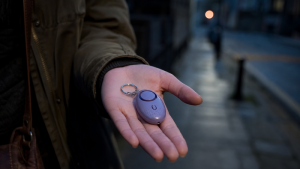
U.S. Legal in Most States • Discreet Shipping • Real-World Protection • No Permits Required in Most Areas
U.S. Legal in Most States • Discreet Shipping • Real-World Protection • No Permits Required in Most Areas
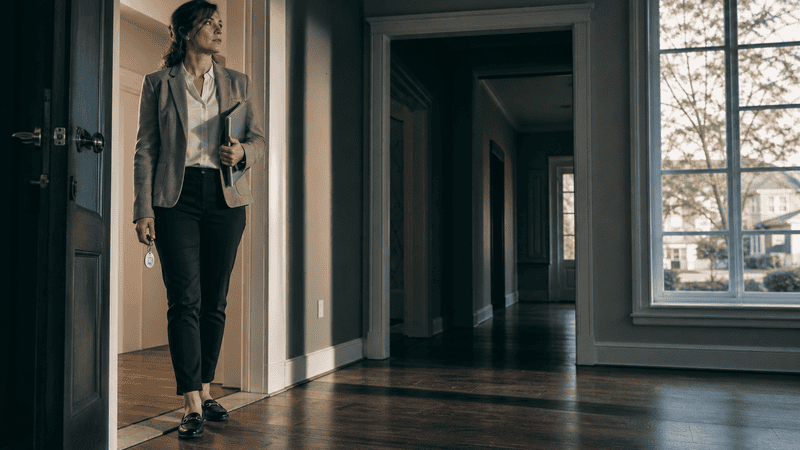
The strongest personal alarms for real estate agents who show homes solo are 130dB devices with pin-pull or squeeze activation, a built-in LED strobe, and a clip or keychain carry system that keeps them accessible within one second — not buried in a bag or briefcase. What most agents don’t realize is that decibel rating alone is only part of the equation. Activation speed, alarm tone continuity, and carry position determine whether a device actually works in a confined space with no witnesses.
There’s a reason experienced security professionals pay attention to the details most buyers skip. The difference between a personal alarm that stops a threat and one that gets fumbled in a stairwell comes down to specs that never make the product listing headline. Real estate agents operate in an environment that has more in common with a controlled access point than a public street — isolated, interior, with limited egress. Understanding what that environment demands from a personal alarm changes everything about how you choose one.
The data on real estate agent safety incidents is more alarming than the industry typically acknowledges. Agents routinely meet strangers in empty, unfurnished properties — no staff, no surveillance, no bystanders. Appointment verification is inconsistent. Cell coverage in older homes or rural listings can be unreliable. And professional norms encourage agents, particularly women, to project calm confidence regardless of what their instincts are telling them.
What makes the solo showing scenario uniquely dangerous isn’t just the isolation — it’s the perceived legitimacy. A client who books a showing has already passed the social threshold that most people associate with safety. Predators who target real estate agents specifically exploit that threshold. The appointment itself becomes cover. This is a risk profile that shares more characteristics with the threats addressed by personal alarms for travelers than most agents would expect — isolated, unfamiliar environments, limited backup, and a need for rapid deterrence.
The silence inside an empty house works against you. A 130dB alarm in an enclosed space creates a sound pressure event that is genuinely disorienting. In an open park, that same device competes with ambient noise and distance. Inside four walls with no furniture to absorb sound, the effect is dramatically amplified. That physics works in your favor — but only if the device is already in your hand.
The minimum effective threshold for a personal alarm in a real-world deterrence scenario is 120dB. Devices rated below that level produce sound comparable to a smoke alarm — attention-getting in some contexts, but not genuinely disorienting to a determined aggressor. The devices that have earned serious consideration from security professionals operate at 130dB or higher.
At 130dB, sound pressure at close range is comparable to a jet engine at 100 feet. Inside a vacant home — hardwood floors, bare walls, minimal absorption — that figure climbs significantly due to reflection. The psychological impact on someone who did not anticipate the sound is substantial. The involuntary startle response alone creates the seconds you need to create distance and exit.
What the spec sheets don’t tell you: continuity matters as much as peak volume. Some lower-cost devices pulse or cycle the alarm tone, creating brief gaps. A continuous, unbroken 130dB tone is more effective at both disorienting an aggressor and attracting external attention. Verify whether the device sustains its rated output or pulses before you purchase.
The strobe function built into many current-generation personal alarms adds a second deterrence channel that is underappreciated. In a low-light interior — a basement, a hallway, a room with closed blinds — a rapid LED strobe creates genuine disorientation. It’s not a gimmick. It’s a second system operating simultaneously with the auditory output.
There are three primary activation mechanisms in the personal alarm market: pin-pull, squeeze or button press, and twist activation. Each has tactical tradeoffs that matter specifically in the real estate showing context.
Pin-pull activation — where a ring or lanyard is separated from the device body — has one decisive advantage: the alarm continues as long as the pin remains separated. If the device is knocked away or grabbed, the alarm keeps sounding. For an agent moving through a property, the pin can be held in one hand while the device body stays clipped to a bag strap or belt. Separation equals activation. That’s a meaningful safety architecture.
Squeeze or button-press activation offers faster single-hand deployment but typically requires sustained pressure to maintain the alarm. Release the button and the alarm stops. In a physical confrontation, sustained button pressure is not guaranteed. Some models address this with a locking mechanism that maintains the alarm after initial activation.
Twist activation — common in compact cylindrical designs — requires a deliberate rotational movement that is less intuitive under stress. It’s more resistant to accidental activation, which matters for agents who keep the device on a keychain that spends time in a bag. The tradeoff is reaction time. Under adrenaline, fine motor skill degrades. Gross motor movements — grabbing, pulling — are more reliable than precise rotations.
For most solo showing scenarios, pin-pull with a wrist or finger ring carry is the professional recommendation. The device stays active regardless of what happens after initial deployment.
Carry position is the variable that most buyers ignore and professionals treat as primary. A 130dB personal alarm inside a tote bag is functionally useless if you need it in under three seconds. Access time is the spec that matters most in a real scenario — and it doesn’t appear on any product page.
The one-second rule: your personal alarm must be reachable and deployable in one second from any position you occupy during a showing. That means it cannot be inside a closed bag. It cannot require you to unclip a case, remove a cap, or locate it visually. It must be in your hand, on your wrist, clipped to your waistband, or on a lanyard around your neck before you enter the property.
Agents who escort clients through multiple rooms face a specific challenge: professional social norms create pressure to appear relaxed and unguarded. A personal alarm that looks like a keychain fob, a decorative pendant, or a standard clip device allows the agent to maintain professional presentation while keeping the device accessible. This is where form factor matters beyond aesthetics — it’s operational cover.
For agents who want a wearable option that doesn’t read as a safety device, a personal alarm watch provides wrist-mounted access with a standard watch appearance. Activation is close to the hand at all times. It’s an option worth evaluating if standard keychain or clip carry doesn’t fit your professional environment.
The personal alarm market contains a wide range from novelty-tier devices to units that meet the standards serious practitioners rely on. The differences aren’t always obvious from a product image, but they show up immediately in deployment.
Battery type and longevity: replaceable batteries outperform rechargeable in sustained-use scenarios where charging access is inconsistent. An agent working multiple showings across a full day needs a device that won’t require a charge between appointments. Devices using standard LR44 or AAA cells with a manufacturer-stated alarm duration of 30 minutes or more at rated output are the baseline for professional use.
Build quality and weather resistance: vacant homes are shown in every weather condition. A device with exposed electronics or a weak housing degrades with regular carry. Look for ABS housing rated for impact resistance and at minimum IPX4 water resistance for carrying in rain or high humidity.
Redundant deterrence systems: the combination of 130dB+ alarm tone with an LED strobe is now available in compact form factors. Both systems operating simultaneously address both the auditory and visual disorientation channels. Single-function devices that only produce sound are functional but represent an earlier generation of the technology.
The Streetwise and Mace brands carried at Nittany Self Defense both offer units that meet these standards in different form factors — worth comparing against your specific carry preference before purchasing.
A personal alarm is one layer of a complete protocol — not a complete protocol by itself. Security professionals don’t rely on single tools. They build layered systems where each element addresses a different phase of a potential threat scenario.
The pre-showing layer: verify appointment identity before arrival. Share your location and showing schedule with a colleague or office contact. Set a check-in time. If you don’t check in, they call you. If you don’t answer, they call the property address and then local non-emergency police. This layer costs nothing and activates a response before any device does.
The arrival layer: before entering, walk the exterior and identify all exit points. Note which doors and windows are accessible. This is structural awareness — understanding your environment before a client is present. Agents who practice this consistently report that it becomes automatic within a few weeks.
The active showing layer: your personal alarm is live, accessible, and you know exactly how to activate it. You position yourself between the client and the nearest exit in each room. You do not enter basement spaces, attic access points, or garage interiors ahead of a client you don’t know.
The post-showing layer: note anything that felt wrong. File it with your office safety contact. Patterns matter. A client who asked unusual questions, who arrived with an unscheduled companion, or who pushed toward isolated areas of the property — these details are worth documenting even when nothing happened. Related reading on layered deterrence in isolated environments: personal alarms in remote areas — when they help and when you need a backup plan.
Agents who are building out their personal safety toolkit beyond the alarm may also want to review options for personal alarms for women — a category that covers a range of form factors and carry configurations specifically evaluated for female professionals.
The loudest personal alarms currently available are rated at 130dB, which is the practical upper limit for consumer-grade devices. At that output level, the alarm produces genuine auditory disorientation in enclosed spaces. Some manufacturers claim higher ratings, but independent testing rarely validates figures above 130dB at standard measurement distances. Focus on verified 130dB devices with continuous tone output rather than chasing higher unverified claims.
Both serve different tactical functions and are not mutually exclusive. A personal alarm creates noise and attracts attention — its primary function is disruption and signaling. Pepper spray is a direct deterrent applied at close range. Agents who carry both address a wider threat spectrum. The alarm activates faster and from greater distance. Pepper spray requires close contact to deploy effectively. Many professionals carry one of each in accessible positions.
130dB is comparable to the output of a jet engine at approximately 100 feet, or a pneumatic drill at close range. Inside an enclosed, unfurnished room — where sound reflects off bare walls and floors — the perceived volume is higher due to reverberation. At that level, the human auditory startle response is involuntary. It creates momentary disorientation that provides critical seconds to create distance and exit.
For solo showing scenarios, pin-pull activation has a meaningful tactical advantage: the alarm continues as long as the pin remains separated from the device body. If the device is grabbed or knocked away, it keeps sounding. Button-press models typically require sustained pressure to maintain the alarm, which is less reliable under physical stress. Pin-pull devices with a wrist or finger ring are the standard recommendation for high-risk isolated environments.
Your personal alarm must be accessible in under one second from any position you occupy during a showing. That means it cannot be inside a closed bag. Best carry positions are: clipped to a belt or waistband, on a wrist lanyard, held in the non-dominant hand with the activation pin looped on a finger, or worn as a watch-style device. Practice retrieval before relying on any carry method in the field.
Yes — the auditory and strobe output of a 130dB alarm functions regardless of relative positions. Activation creates immediate sensory disruption that affects everyone in the space, including the person between you and the exit. The goal of the alarm is not to communicate distress — it’s to create disorientation that interrupts a threat and opens a window for movement. Combined with pre-positioning awareness (knowing exit routes before entering each room), the alarm is most effective.
In rural settings with significant distance between properties, a personal alarm’s effectiveness at attracting nearby witnesses is reduced. However, its primary function remains threat disruption — the disorienting effect on an aggressor does not depend on bystanders being present. For rural and remote showings, the alarm should be paired with a GPS check-in protocol and pre-scheduled callbacks from a colleague. Our detailed analysis of how personal alarms perform in remote areas covers this scenario in depth.
A personal alarm watch offers wrist-mounted access with near-instant activation and a form factor that doesn’t signal safety concern to a client — which matters in the professional showing context. Output on current models ranges from 100dB to 120dB, which is below the 130dB benchmark but still effective in close-range enclosed environments. Evaluate the tradeoff between peak output and carry convenience against your specific showing environment.
Real estate agents who show homes alone operate in an environment that most people never think about until something goes wrong. The right personal alarm doesn’t eliminate that risk — nothing does. But a 130dB device in your hand, with a carry method you’ve practiced and a protocol behind it, changes the odds in ways that are worth understanding. Browse the personal alarms for women category at Nittany Self Defense for current inventory, or compare options across the full personal alarm line to find the specification and form factor that fits your workflow.




We use cookies to improve your experience on our site. By using our site, you consent to cookies.
Manage your cookie preferences below:
Essential cookies enable basic functions and are necessary for the proper function of the website.
These cookies are needed for adding comments on this website.
Statistics cookies collect information anonymously. This information helps us understand how visitors use our website.
Google Analytics is a powerful tool that tracks and analyzes website traffic for informed marketing decisions.
Service URL: business.safety.google (opens in a new window)