
U.S. Legal in Most States • Discreet Shipping • Real-World Protection • No Permits Required in Most Areas
U.S. Legal in Most States • Discreet Shipping • Real-World Protection • No Permits Required in Most Areas

Best Weapons For Women? Quick Answer: There is no single “best” self-defense tool for every woman – the right choice depends on your lifestyle, comfort level, and local laws. Pepper spray offers distance and effectiveness against multiple threats, stun guns require close contact but deliver a powerful deterrent, and personal alarms are legal everywhere and require zero training. Most safety experts recommend layering at least two of these tools for everyday carry.
A tool you won’t carry is a tool that can’t protect you. That’s the single most important thing I want you to take away from this post. I see it happen all the time – someone buys a stun gun, tosses it in the bottom of a purse they never dig through, and it becomes an expensive paperweight. Choosing the wrong tool doesn’t just leave a gap in your safety plan; it can give you a false sense of security that’s actually more dangerous than having nothing at all.
Before we compare these three options, here’s a quick self-assessment checklist. Be honest with yourself:
Your honest answers to those questions matter more than any product review. Let’s walk through each option with that in mind.
Yes – pepper spray is one of the most reliably effective non-lethal self-defense options available to everyday women. The active ingredient, oleoresin capsicum (OC), causes immediate temporary blindness, intense burning of the skin and airways, and uncontrollable coughing. Most formulas take effect within seconds and can affect an attacker from 6 to 12 feet away – giving you crucial distance and time to escape.
Here’s what you need to know before you buy:
Pepper spray is my top recommendation for most women because it works at a distance, doesn’t require physical strength, and is small enough to clip to a keychain or slip into a jacket pocket. The critical warning: wind and close quarters can complicate deployment. Know your environment.
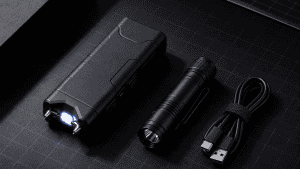
A stun gun delivers a high-voltage, low-amperage electrical shock that temporarily disrupts the body’s neuromuscular system – causing involuntary muscle contractions, disorientation, and pain. The result is that an attacker loses voluntary muscle control for several seconds, giving you time to run. Stun guns are contact weapons, which means you must be within arm’s reach to use one. That’s the critical detail most people overlook.
Stun guns are a strong option if:
Important warnings before carrying a stun gun:
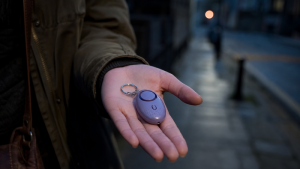
Absolutely – and personal alarms are dramatically underestimated as a self-defense tool. A quality personal alarm emits 120-130 decibels of sound, which is louder than a car horn, when activated. That level of noise draws immediate attention, disorients an attacker, and signals distress to anyone within earshot. They’re legal in all 50 states, require no training, and can be carried anywhere – including schools, airports, and government buildings where other tools are prohibited.
Here’s why a personal alarm deserves a place in every woman’s safety kit:
The honest limitation of a personal alarm: it does not physically stop a determined attacker in an isolated location. If no one can hear it, it loses much of its power. That’s why I recommend pairing an alarm with pepper spray or a stun gun rather than treating it as a standalone solution in all situations.
The most effective personal safety approach is layered – not a single tool, but a combination of options that cover different scenarios. Think of it the same way you think about seatbelts and airbags. One is good; both together is significantly safer.
Here’s a practical layered approach based on your daily routine:
Critical checklist for your everyday carry setup:
Here’s a short but helpful video about non-lethal self defense tools.
Knowing what not to do is just as important as knowing what to buy. Here are the mistakes I see most often – and the ones most likely to leave you vulnerable at the wrong moment:
No – pepper spray is prohibited in carry-on luggage by TSA regulations. You may be able to pack a small canister in checked baggage if it meets size and concentration requirements, but policies change and vary by airline. Always check the TSA website and your airline’s specific rules before traveling. For air travel, a personal alarm is the safest carry-anywhere alternative.
A stun gun requires direct contact with the target – you must press it against the person. A TASER fires two probes attached to wires, allowing it to work from a distance of up to 15 feet. Civilian TASERs are available but significantly more expensive. Stun guns are far more common in everyday carry because they’re affordable, compact, and rechargeable. Both require you to be in close proximity to the threat.
Most pepper spray formulas cause intense effects – burning, temporary blindness, coughing, and disorientation – lasting anywhere from 20 to 45 minutes. That window is more than enough time to escape and call for help, which is exactly what you should do immediately after deploying it. The effects begin within seconds of contact with the face and mucous membranes.
In truly isolated locations, a personal alarm has limited effectiveness because its primary power is drawing attention. However, even in low-traffic areas, the sudden 130-decibel burst can startle and disorient an attacker, creating a brief window to escape. Personal alarms work best as part of a layered safety plan alongside pepper spray or a stun gun, not as a standalone tool in all environments.
Stun guns can work through thin clothing, but thick layers like heavy coats, denim, or leather significantly reduce effectiveness. For best results, aim for exposed skin on the neck, arms, or face area – or press the device firmly through lighter fabric. Knowing this limitation matters, especially in winter months when attackers and targets alike are bundled up.
Most states set the minimum age at 18, though some allow minors to carry with parental consent. A few states have additional restrictions around purchase locations or require a firearms license. Because laws vary significantly by state and municipality, always verify the specific rules for your location before purchasing or carrying any self-defense product. Your local police department website is a reliable starting point.
This is a personal decision, but generally speaking, your safety tools work best when they’re not broadcast to everyone around you. Share your setup with trusted family members so they know what you carry and why. Avoid displaying or announcing your tools in public – it reduces the element of surprise and can invite unwanted attention or make others uncomfortable in low-threat environments.
Pepper spray should be checked every six months and replaced before its expiration date – typically every two to four years. Stun gun batteries should be tested monthly and charged regularly. Personal alarm batteries should be replaced annually or when the sound weakens noticeably. Set recurring calendar reminders so this doesn’t fall through the cracks. A tool that fails when you need it is worse than no tool at all.
Here’s the bottom line: pepper spray is the best single tool for most women in most situations because it works at distance and doesn’t require physical strength or close contact. Stun guns add a powerful close-range option for women who will train with them and carry them consistently. Personal alarms are the most universally accessible first line of defense and should be in everyone’s kit, no exceptions.
But the tool is only part of the equation. Your safety plan includes staying aware, trusting your instincts, making your tools accessible, and practicing their use until deployment is automatic. You don’t need to become a tactical expert. You just need to be prepared enough to create an escape opportunity when it matters.
If you have questions about which specific products fit your lifestyle, reach out – I’m always happy to help you think it through. That’s what we’re here for.
Until later…..







We use cookies to improve your experience on our site. By using our site, you consent to cookies.
Manage your cookie preferences below:
Essential cookies enable basic functions and are necessary for the proper function of the website.
These cookies are needed for adding comments on this website.
Statistics cookies collect information anonymously. This information helps us understand how visitors use our website.
Google Analytics is a powerful tool that tracks and analyzes website traffic for informed marketing decisions.
Service URL: business.safety.google (opens in a new window)