
U.S. Legal in Most States • Discreet Shipping • Real-World Protection • No Permits Required in Most Areas
U.S. Legal in Most States • Discreet Shipping • Real-World Protection • No Permits Required in Most Areas
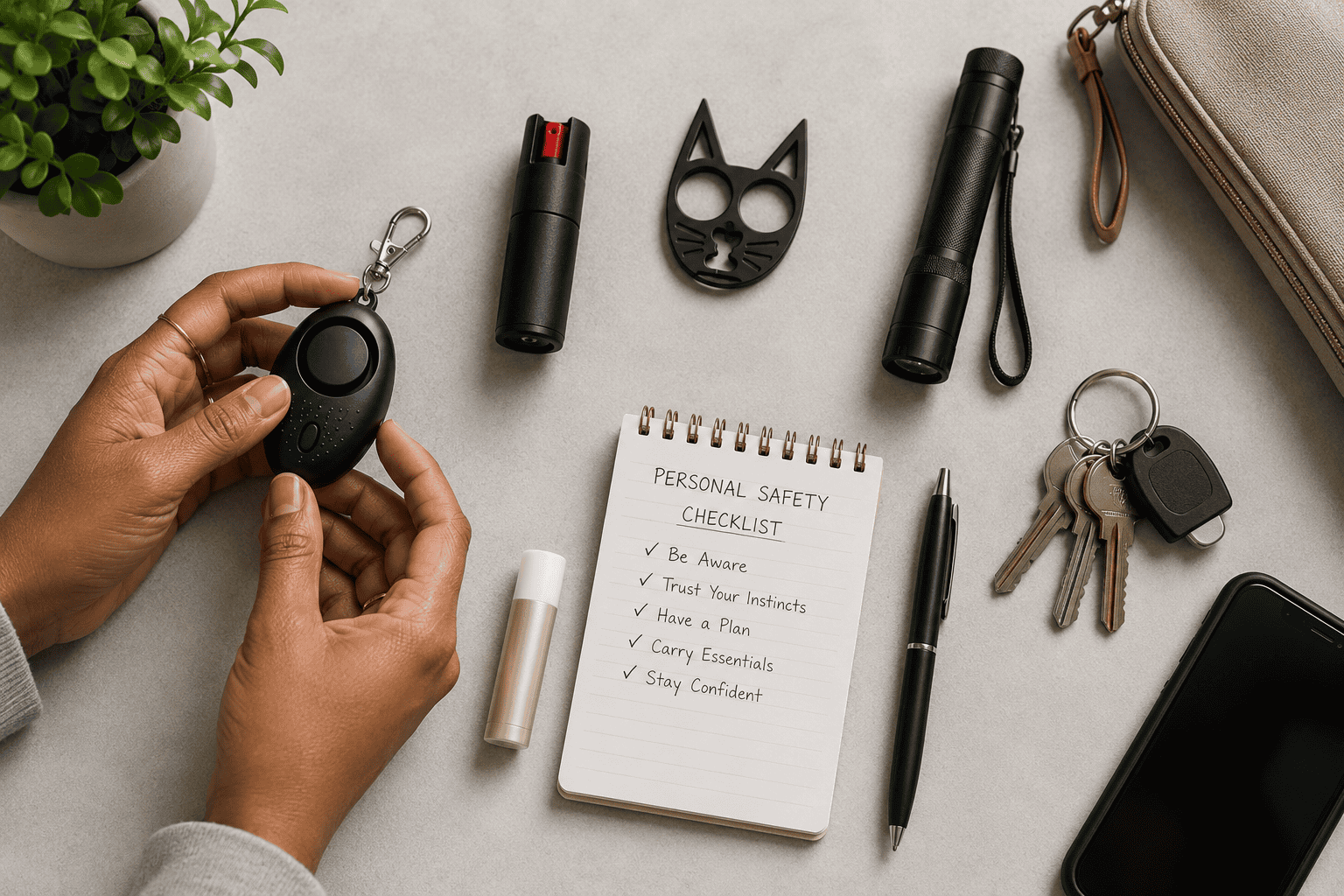
Quick Answer: Before you buy any non lethal self defense product, check five things: legal status in your state, product quality and reliability, ease of use under stress, realistic effective range, and whether it fits your everyday carry lifestyle. Skipping even one of these steps can mean the difference between a tool that genuinely protects you and one that lets you down at the worst possible moment.
Here’s the honest truth: most people walk into a self-defense purchase the same way they’d buy a phone case – they look at price, pick something that looks decent, and move on. But a non-lethal self-defense product isn’t a phone case. It’s a tool you’re counting on to work correctly, immediately, and under conditions that are anything but calm. A bad phone case is an inconvenience. A bad self-defense product could cost you dearly.
I’ve spent a lot of time learning about these products, and the pattern I see over and over is this: people buy based on looks or low price, and then either discover their purchase is illegal where they live, or they’ve never actually practiced using it, or it’s sitting at the bottom of a bag they can never get to quickly. None of those scenarios keeps anyone safer.
Let’s fix that. Here are the five things you absolutely must evaluate before you hand over your money.
Legality is the first thing to check – full stop. It doesn’t matter how effective a product is if carrying it puts you in legal jeopardy before you ever use it defensively.
Non-lethal self-defense laws vary significantly from state to state and even city to city. Here’s a breakdown of what to research before you buy:
Before you buy, do this checklist:
Don’t assume that because a product is sold online and shipped to your address, it’s automatically legal for you to carry it. Retailers can’t always verify local ordinances at checkout. That responsibility is yours.
Quality determines reliability, and reliability is everything when seconds count. A cheap product that misfires, leaks, or breaks the first time you deploy it isn’t just useless – it’s a false sense of security that may have replaced a better choice.
Here’s what separates a trustworthy product from a shelf-filler:
A useful rule of thumb: if the price seems too good to be true for what’s being advertised, trust that instinct. Quality self-defense tools cost a little more for a reason.
This is the question most people never ask – and it may be the most important one on this list. A product that’s complicated to deploy under calm conditions becomes nearly impossible to use when your hands are shaking, adrenaline is flooding your system, and you have about two seconds to act.
The neuroscience here matters: under acute stress, fine motor skills degrade significantly. Your brain defaults to practiced gross motor movements. If you’ve never practiced drawing and activating your self-defense tool, there’s a real chance you’ll fumble it when it matters most.
Before you commit to any product, ask yourself these questions:
Spend fifteen minutes practicing with any new product in a safe, open environment before you start carrying it. For pepper spray specifically, consider purchasing a water-based practice spray that lets you train without the irritants. That practice is not optional – it’s what turns a product into a skill.
Here’s a helpful video about developing situational awareness. Which can be a practical compliment to your chosen self defense tools.
Effective range matters enormously, and it’s almost always misunderstood. Many buyers assume more range is always better, but that’s not the full picture. Range affects both your safety and your accuracy, and the right range depends entirely on where and how you expect to use the product.
Here’s a practical breakdown by product type:
Warning: Do not rely on the maximum range listed on the packaging. Manufacturers test under ideal conditions. Wind, humidity, and stress will reduce your real-world range. Always mentally subtract 20-30% from any advertised range figure and make sure the product still meets your needs.
The best self-defense product in the world is the one you actually have with you. If a product is too bulky, too heavy, or too inconvenient to carry consistently, you’ll leave it at home – and it can’t help you from a nightstand drawer.
Evaluate every product against your real daily routine, not your ideal routine:
Take a week before committing to a purchase and mentally walk through your daily routine. Where would you carry this? When would you need to access it? What obstacles would you face? If you can’t picture a clean, realistic carry solution, the product probably isn’t the right fit – no matter how good it is on paper.
Pepper spray is the most widely recommended starting point for most people. It’s legal in all 50 states (with some restrictions), effective at a safe distance, and available in sizes that fit any carry style. Choose a reputable brand with a clear expiration date, pick a formula that matches your environment, and practice your deployment before you need it for real. Start simple, then expand your toolkit as your confidence grows.
Most quality pepper spray canisters have an expiration date printed on the bottom or side of the canister. Once expired, the propellant pressure can drop and the OC concentration may degrade – meaning reduced range and effectiveness. Replace your canister before it expires, typically every 2 to 4 years depending on the brand. Never rely on an expired product as your primary defense tool, and never test spray indoors.
Not necessarily. Voltage figures in stun gun marketing can be misleading. What matters more is amperage, contact surface area, and build quality. A well-constructed stun gun from a reputable brand at a moderate voltage rating will outperform a cheap high-voltage unit every time. Focus on brand reputation and verified output rather than impressive-sounding numbers. A stun gun that fails to discharge when activated is worse than not having one at all.
No. The TSA prohibits pepper spray in carry-on baggage. You may be able to pack it in checked luggage under specific conditions – the canister must be 4 oz or less and have a safety mechanism to prevent accidental discharge. Even then, airline policies vary. If you travel frequently, research destination laws before shipping or buying at your destination, and always check the current TSA guidelines directly before flying.
Yes – in the right context. A 120dB+ personal alarm draws immediate attention, can startle an attacker, and signals distress to bystanders who can call for help. They’re most effective in populated areas where others can hear and respond. In isolated locations, their effectiveness drops significantly. Personal alarms are an excellent complement to other tools, particularly for children, college students, or anyone in a situation where other self-defense products aren’t legal or practical.
Leave the area immediately and get fresh air. Do not touch your eyes or face with your hands. If skin or eyes are exposed, flush with large amounts of cool water for at least 15 minutes – do not use soap initially as it can spread the OC. Ventilate the space by opening windows and doors. The effects are temporary but serious. This is also a strong reminder to always practice with a water-based training spray rather than your live canister.
Do a monthly check of all your self-defense products. For pepper spray, verify the expiration date and check for any signs of leaking or canister damage. For stun devices and alarms, test the battery and function monthly. Replace batteries proactively – don’t wait for a low-battery warning. Create a simple calendar reminder so this becomes a routine habit rather than something you only remember after something goes wrong.
For most people, yes – with one important condition: every product you own should be one you’ve practiced with and carry consistently. A layered approach makes sense; for example, pepper spray for distance deterrence and a personal alarm for attracting attention. But owning six products you’ve never practiced with is far less valuable than mastering one or two that suit your lifestyle. Start with what you’ll actually use, then build thoughtfully from there.
Buying a non-lethal self-defense product isn’t complicated, but it does require intentional thought. Run through this checklist every single time before you make a purchase:
If you can honestly answer yes to all five, you’re making a thoughtful, responsible choice. If even one answer is uncertain, dig deeper before you buy. The goal isn’t to own self-defense tools – it’s to feel genuinely more prepared and confident in your daily life. Those are two very different things, and only one of them actually makes you safer.
Take your time. Do the research. And when you find the right fit, practice with it until using it feels natural. That combination – the right product, legally carried, confidently deployed – is what real preparedness looks like.
Until later…..







We use cookies to improve your experience on our site. By using our site, you consent to cookies.
Manage your cookie preferences below:
Essential cookies enable basic functions and are necessary for the proper function of the website.
These cookies are needed for adding comments on this website.
Statistics cookies collect information anonymously. This information helps us understand how visitors use our website.
Google Analytics is a powerful tool that tracks and analyzes website traffic for informed marketing decisions.
Service URL: business.safety.google (opens in a new window)